


€ 99,99 Gratis verzending

Uitgelicht
|
|
99,99 |
Naar shop
|
| VERGELIJK ALLE AANBIEDERS (1) | ||
 Beschrijving
Vergelijk aanbieders (1)
€ 99,99 Gratis verzending
Winkels met andere maten
Beschrijving
(1)
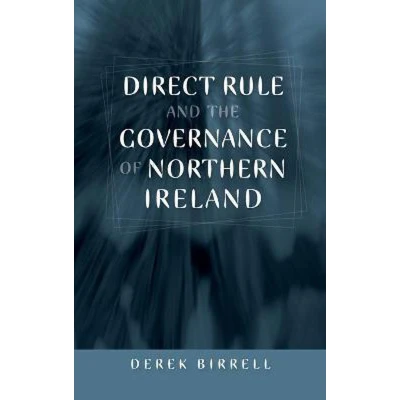
This is the first comprehensive study of the operation of direct rule between 1972 and 2007 as a system of governance. How direct rule moulded the institutions of governance is analysed in detail. In addition, direct rule is compared with devolution, identifying the deficiencies and advantages of both systems. This is the first comprehensive study of direct rule as the system of governance which operated in Northern Ireland for most of the period between 1972 and 2007. The major institutions of governance are described and examined in detail, including the often neglected sectors of the role of the Westminster parliament, the civil service, local government, quangos, ombudsmen offices, cross-border structures and the public expenditure process.The book explains how the complex system covering transferred, reserved and excepted functions worked and provided viable governance despite political violence, constitutional conflict and political party disagreements. In addition, a comparison is drawn between direct rule and devolution, analysing both the positive and negative impact of direct rule, as well as identifying where there has been minimal divergence in processes and outcomes. It will prove an invaluable reference source on direct rule and provide a comparative basis for assessing devolution for students of public administration, government, politics, public policy and devolution. This is the first comprehensive study of direct rule as the system of governance which operated in Northern Ireland for most of the period between 1972 and 2007. The major institutions of governance are described and examined in detail, including the often neglected sectors of the role of the Westminster parliament, the civil service, local government, quangos, ombudsmen offices, cross-border structures and the public expenditure process.The book explains how the complex system covering transferred, reserved and excepted functions worked and provided viable governance despite political violence, constitutional conflict and political party disagreements. In addition, a comparison is drawn between direct rule and devolution, analysing both the positive and negative impact of direct rule, as well as identifying where there has been minimal divergence in processes and outcomes. It will prove an invaluable reference source on direct rule and provide a comparative basis for assessing devolution for students of public administration, government, politics, public policy and devolution.
 Productspecificaties
| EAN |
|
|---|---|
| Maat |
|
 Prijshistorie
Prijzen voor het laatst bijgewerkt op:
 Gerelateerde resultaten


