

€ 37,10 Gratis verzending

Uitgelicht
|
|
37,10 |
Naar shop
|

|
37,10 |
Naar shop
|

|
37,10 |
Naar shop
|
| VERGELIJK ALLE AANBIEDERS (3) | ||
 Beschrijving
Vergelijk aanbieders (3)
€ 37,10 Gratis verzending
€ 37,10 Gratis verzending
€ 37,10 Gratis verzending
Winkels met andere maten
Beschrijving
(1)
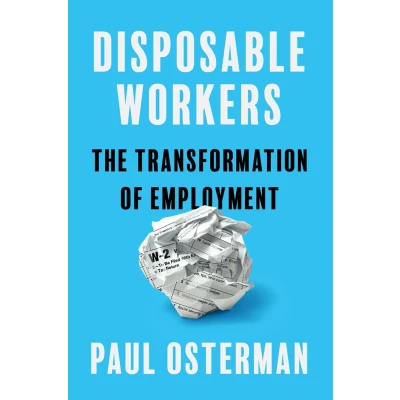
Over 35 percent of American workers are not treated as standard employees, denied both benefits and access to a career ladder. Paul Osterman surveyed more than 6,000 people to understand what it means to be a disposable worker. Noting that most would prefer traditional employment, Osterman offers proposals for job-quality reform. A revealing look at the decline in formal employment in favor of hiring contractors, freelancers, temps, and marginal workers, who are excluded from traditional benefits and career ladders.Companies cannot exist without workers, but they are increasingly reluctant to have employees. Instead of providing the benefits and protections that have traditionally come with employee status, businesses are turning to tactics that let them treat people as interchangeable parts, to be used and discarded as needed. Drawing on an original survey of over 6,000 workers, Disposable Workers reveals the striking extent of this transformation across the occupational hierarchy, affecting everyone from janitors to nurses.Paul Osterman identifies three distinct categories of disposable workers: contractors, freelancers, and marginal employees. The marginal category, unique to Osterman’s analysis, describes workers who are employees from a narrow legal standpoint but are held at arm’s length by their firm—left without job security, skill training, or opportunities for promotion. Many low-wage service workers toil in marginal jobs, but so do white-collar professionals such as adjunct university faculty and staff attorneys at law firms. When the three categories are added up, they account for more than 35 percent of the American workforce.Not all disposable workers object to their arrangements. But most contractors and marginal employees would prefer standard employment, and there is a significant cost to their current status. In response, Disposable Workers offers a range of policy recommendations, including mechanisms to prevent over-reliance on contracting and freelancing as well as reforms to improve job quality for part-timers and marginal employees. As the deconstruction of employment affects more and more workers, the importance of such measures will only grow.
 Prijshistorie
 * Prijshistorie bevat geen data van Amazon, Amazon Marketplace.
Prijzen voor het laatst bijgewerkt op:
 Gerelateerde resultaten
 Productspecificaties


