


gebruikt € 60,00 Gratis verzending

Uitgelicht
|
|
60,00 |
Naar shop
|
| VERGELIJK ALLE AANBIEDERS (1) | ||
 Beschrijving
Vergelijk aanbieders (1)
gebruikt € 60,00 Gratis verzending
Winkels met andere maten
Beschrijving
(1)
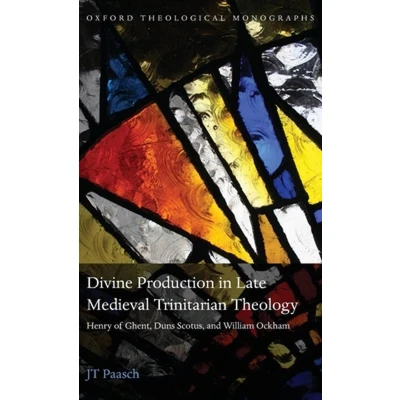
This book examines the central ideas that defined the debate about divine production in the Trinity in the late 13th and early 14th centuries, namely those of Henry of Ghent, John Duns Scotus, and William Ockham. Their discussions are significant for the history of trinitarian theology and the history of philosophy. According to the doctrine of the Trinity, the Father, Son, and Spirit are supposed to be distinct from each other, and yet be one and the same God. As if that were not perplexing enough, there is also supposed to be an internal process of production that gives rise to the Son and Spirit: the Son is said to be 'begotten' by the Father, while the Spirit is said to 'proceed' either from the Father and the Son together, or from the Father, but through the Son. One might wonder, though, just how this sort of divine production is supposed to work. Does the Father, for instance, fashion the Son out of materials, or does he conjure up the Son out of nothing? Is there a middle ground one could take here, or is the whole idea of divine production simply unintelligible? In the late 13th and early 14th centuries, scholastic theologians subjected these questions to detailed philosophical analysis, and those discussions make up one of the most important, and one of the most neglected, aspects of late medieval trinitarian theology. This book examines the central ideas and arguments that defined this debate, namely those of Henry of Ghent, John Duns Scotus, and William Ockham. Their discussions are significant not only for the history of trinitarian theology, but also for the history of philosophy, especially regarding the notions of production and causal powers.
 Productspecificaties
| EAN |
|
|---|---|
| Maat |
|
 Prijshistorie
 Prijzen voor het laatst bijgewerkt op:
 Gerelateerde resultaten


