


€ 199,00 Gratis verzending

Uitgelicht
|
|
199,00 |
Naar shop
|
| VERGELIJK ALLE AANBIEDERS (1) | ||
 Beschrijving
Vergelijk aanbieders (1)
€ 199,00 Gratis verzending
Winkels met andere maten
Beschrijving
(1)
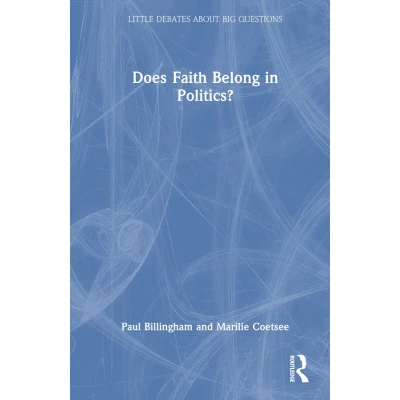
Can religious citizens live cooperatively and justly with others in a pluralistic polity? Can religious arguments play a role within healthy democratic deliberation? The authors debate these timely issues, examining what responsible democratic citizenship requires of the religiously committed, taking turns responding to each other. Can religious citizens live cooperatively and justly with others in a pluralistic polity? Can religious arguments play a role within healthy democratic deliberation? In this volume, Paul Billingham and Marilie Coetsee debate these timely issues, examining what responsible democratic citizenship requires of the religiously committed. Billingham argues that a religious citizen doesn’t need to check or undermine her deepest beliefs in order to engage in the political life of a pluralistic society, and rebuts familiar worries about religious political arguments being dogmatic, domineering, and incomprehensible and unpersuasive to non-believers. Furthermore, he draws on real-life examples to argue that religious contributions to democratic deliberation can be beneficial, ultimately strengthening discourse, pluralism, and democracy. Coetsee is much more skeptical. She argues that a pluralistic democracy requires a “strong integrationist” commitment from all citizens, a commitment that poses strong challenges to the religiously devout and to the cohesion of religious communities. Such integrationist commitments, according to Coetsee, include being active in non-religious civic associations and advancing non-religious reasons for laws that those outside their faith will accept. The two authors then take turns responding to each other.
 Productspecificaties
| EAN |
|
|---|---|
| Maat |
|
 Prijshistorie
 Prijzen voor het laatst bijgewerkt op:
 Gerelateerde resultaten


