


€ 179,00 Gratis verzending

Uitgelicht
|
|
179,00 |
Naar shop
|

|
222,60 |
Naar shop
|

|
222,60 |
Naar shop
|
| VERGELIJK ALLE AANBIEDERS (3) | ||
 Beschrijving
Vergelijk aanbieders (3)
€ 179,00 Gratis verzending
€ 222,60 Gratis verzending
€ 222,60 Gratis verzending
Winkels met andere maten
Beschrijving
(1)
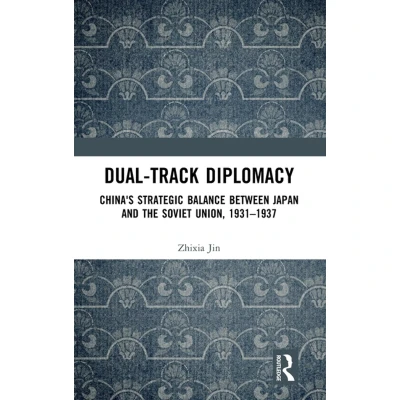
Between 1931 and 1937, Nationalist China was caught between Japanese imperial expansion and the unpredictable intentions of the Soviet Union, facing an increasingly hostile external environment. This book reconstructs how China navigated this precarious situation through a sophisticated strategy known as 'dual-track diplomacy'. Between 1931 and 1937, Nationalist China was caught between Japanese imperial expansion and the unpredictable intentions of the Soviet Union, facing an increasingly hostile external environment. This book reconstructs how China navigated this precarious situation through a sophisticated strategy known as 'dual-track diplomacy'. While seeking to delay a full-scale war by accommodating Japan, Chiang Kai-shek endeavoured to improve relations with the Soviet Union as a potential counterweight. Moving beyond traditional narratives, the book analyses the underlying mechanics of diplomatic practice, revealing how factional divisions, overlapping authorities, and secret channels were exploited as strategic assets. It shows that the careful management of the divergence between internal authority and external posture influenced how China's diplomatic orientation was perceived abroad. This approach enabled Nanjing to engage in parallel, and sometimes contradictory, diplomacy with Tokyo and Moscow. By integrating Sino-Japanese and Sino-Soviet relations into a single framework, the book offers a new perspective on East Asian international history during the interwar period. It will appeal to scholars and students of modern Chinese history and East Asian international relations.
 Prijshistorie
 * Prijshistorie bevat geen data van Amazon, Amazon Marketplace.
Prijzen voor het laatst bijgewerkt op:
 Gerelateerde resultaten
 Productspecificaties


