

€ 14,64 Gratis verzending

Uitgelicht
|
|
14,64 |
Naar shop
|

|
14,64 |
Naar shop
|

|
16,00 |
Naar shop
|
| VERGELIJK ALLE AANBIEDERS (3) | ||
 Beschrijving
Vergelijk aanbieders (3)
€ 14,64 Gratis verzending
€ 14,64 Gratis verzending
€ 16,00 € 2,99 verzendkosten Totaal € 18,99
Winkels met andere maten
Beschrijving
(1)
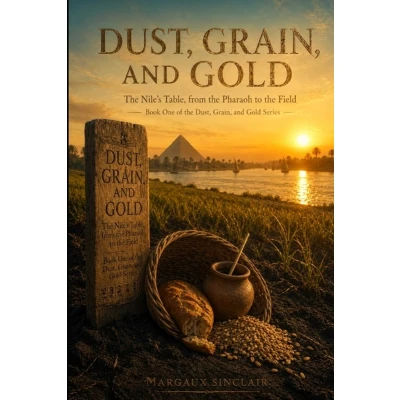
Nine ducks. Four geese. Beef mummified with the same care given to a king's own body. When Tutankhamun's tomb was opened in 1922, it revealed a kitchen sealed for three thousand years, provisioned for an eternity its young occupant never had the chance to actually live. Dust, Grain, and Gold follows that same conviction, that the dead required real feeding, across six distinct tables spanning the whole of ancient Egyptian society. A pharaoh's banquet, reconstructed from tomb paintings never meant to document a single ordinary meal. A temple's daily offering cycle, where a formally named theological system fed both gods and priests through the exact same bread. A pyramid worker's monthly ration, precise enough to survive on payroll ostraca, and substantial enough that these laborers staged history's first documented strike when it arrived late. A farmer's harvest, governed entirely by the Nile's three season flood. A tomb's stone offering table, kept stocked across generations by hired priests. And finally, beer itself, the one beverage that touched pharaoh and laborer alike. Grounded in archaeological evidence from Giza, Deir el Medina, and Tutankhamun's own tomb goods, this book traces an entire civilization through what it buried, brewed, and believed worth feeding forever.
 Prijshistorie
 * Prijshistorie bevat geen data van Amazon, Amazon Marketplace.
Prijzen voor het laatst bijgewerkt op:
 Gerelateerde resultaten
 Productspecificaties


