

€ 12,82 Gratis verzending

Uitgelicht
|
|
12,82 |
Naar shop
|

|
12,82 |
Naar shop
|

|
13,50 |
Naar shop
|
| VERGELIJK ALLE AANBIEDERS (3) | ||
 Beschrijving
Vergelijk aanbieders (3)
€ 12,82 Gratis verzending
€ 12,82 Gratis verzending
€ 13,50 € 2,99 verzendkosten Totaal € 16,49
Winkels met andere maten
Beschrijving
(1)
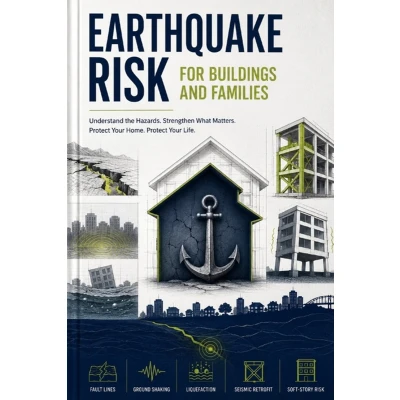
Earthquake Risk for Buildings and Families helps readers see why earthquake preparedness depends on sequence, evidence quality, and institutional context. Readers are asked to slow down whenever claims about fault lines appear without seismic retrofits, liquefaction, or a record trail. The chapters organize the field around what can be observed, what must be inferred, and what should be questioned. Concrete risks such as insurance, building codes, and recovery planning keep the discussion grounded in field-specific judgment. Applied sections show how small changes in timing, context, or documentation can alter the conclusion. The closing chapters turn domain knowledge into questions that can guide real conversations and decisions. The book stays neutral in tone while giving readers enough structure to challenge weak claims. Earthquake Risk for Buildings and Families uses recovery planning as a checkpoint for deciding when the available evidence is strong enough. Its practical sections connect liquefaction with emergency kits, giving the subject enough texture for comparison without overclaiming. The final examples place building codes beside recovery planning, helping readers compare options without pretending every case is settled.
 Prijshistorie
 * Prijshistorie bevat geen data van Amazon, Amazon Marketplace.
Prijzen voor het laatst bijgewerkt op:
 Gerelateerde resultaten
 Productspecificaties


