








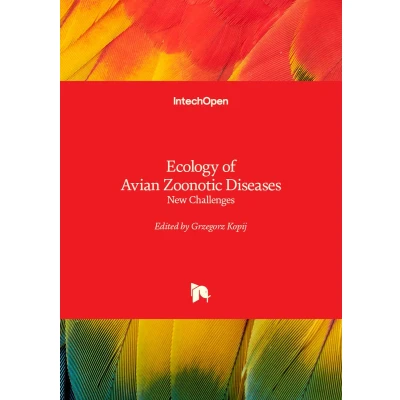
Ecology of Avian Zoonotic Diseases New Challenges
Uitgelicht

|
115,00
109,00 |
Naar shop
|
 Beschrijving
Bol
The book presents five chapters related to the ecology of avian diseases, the recently emerged branch of avian ecology, veterinary medicine, human medicine virology and parasitology. It is, therefore, a multidisciplinary book. It advances studies on the ecology of avian epizootic diseases. Two case studies are presented: one from Kinshasa in the Democratic Republic of Congo and the other from Tibet in China. Both studies focus on relationships between birds, humans, microbiota and environment. The avian influenza is the main object of this study. It is a viral disease mainly affecting waterbirds, but it has been transmitted to humans in recent years and has caused serious health problems. The book shows how the disease emerged from its original site in the lake in Tibet and how it spread worldwide. The study from Kinshasa focuses on the Malachite Kingfisher and a few other bird species. This is a good example of a holistic approach to the problems linked to avian diseases, the ecology of birds (site fidelity, timing of breeding, breeding success, diet), microbiota, parasites and human health. The study also turns attention to birds as good indicators of environmental quality. A separate chapter deals with these aspects of hematology, which are relevant to avian diseases. Special attention is paid to factors influencing fluctuations in hematocrit levels of birds in relation to their age, sex, season of the year, physiological indices (metabolism, energetics), breeding status, parasites, season of the year, and altitude of inhabited area. Blood elements such as erythrocytes, granulocytes (heterophils, granulocytes, eosinophils and basophils), and agranulocytes (monocytes, lymphocytes, thrombocytes) are compared between 14 selected bird species from different parts of the world. These parameters are essential for health monitoring (critical early warning markers of stress, disease, and malnourishment in bird populations). This book targets a broad audience of ecologists, ornithologists, students of zoonotic diseases, and researchers in veterinary and human medicine.


Vergelijk aanbieders (1)

 Beschrijving
(1)
Beschrijving
(1)
The book presents five chapters related to the ecology of avian diseases, the recently emerged branch of avian ecology, veterinary medicine, human medicine virology and parasitology. It is, therefore, a multidisciplinary book. It advances studies on the ecology of avian epizootic diseases. Two case studies are presented: one from Kinshasa in the Democratic Republic of Congo and the other from Tibet in China. Both studies focus on relationships between birds, humans, microbiota and environment. The avian influenza is the main object of this study. It is a viral disease mainly affecting waterbirds, but it has been transmitted to humans in recent years and has caused serious health problems. The book shows how the disease emerged from its original site in the lake in Tibet and how it spread worldwide. The study from Kinshasa focuses on the Malachite Kingfisher and a few other bird species. This is a good example of a holistic approach to the problems linked to avian diseases, the ecology of birds (site fidelity, timing of breeding, breeding success, diet), microbiota, parasites and human health. The study also turns attention to birds as good indicators of environmental quality. A separate chapter deals with these aspects of hematology, which are relevant to avian diseases. Special attention is paid to factors influencing fluctuations in hematocrit levels of birds in relation to their age, sex, season of the year, physiological indices (metabolism, energetics), breeding status, parasites, season of the year, and altitude of inhabited area. Blood elements such as erythrocytes, granulocytes (heterophils, granulocytes, eosinophils and basophils), and agranulocytes (monocytes, lymphocytes, thrombocytes) are compared between 14 selected bird species from different parts of the world. These parameters are essential for health monitoring (critical early warning markers of stress, disease, and malnourishment in bird populations). This book targets a broad audience of ecologists, ornithologists, students of zoonotic diseases, and researchers in veterinary and human medicine.
 Productspecificaties
| EAN |
|
|---|---|
| Maat |
|
 Prijshistorie
Prijzen voor het laatst bijgewerkt op:
 Gerelateerde resultaten


