


€ 125,00 Gratis verzending

Uitgelicht
|
|
125,00 |
Naar shop
|

|
138,02 |
Naar shop
|

|
138,02 |
Naar shop
|
| VERGELIJK ALLE AANBIEDERS (3) | ||
 Beschrijving
Vergelijk aanbieders (3)
€ 125,00 Gratis verzending
€ 138,02 Gratis verzending
€ 138,02 Gratis verzending
Winkels met andere maten
Beschrijving
(1)
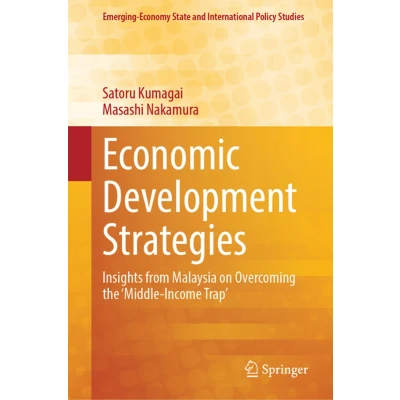
This book offers a compelling analysis of Malaysia’s path to sustained economic growth and social stability, illuminating how the country navigated the complex challenges of industrialization, ethnic diversity, and inequality. Spanning six decades of development from the 1960s to the 2020s, the book integrates rigorous economic analysis with nuanced political insights to present a comprehensive account of Malaysia’s transformation. Through detailed examination of industrial upgrading, productivity growth, and policy implementation, the book reveals how Malaysia balanced rural development with urbanization and economic expansion with ethnic harmony. Unlike many developing nations that prioritized industrialization at the expense of rural sectors, Malaysia pursued a dual-track strategy—supporting both agriculture and industry while managing labor transitions across sectors. Central to this success was Malaysia’s competitive authoritarian political system, which enabled decisive policy shifts at critical junctures. The book explores how this governance model facilitated the country’s transition from a primary commodity exporter to a diversified industrial economy, while actively addressing ethnic economic disparities. Essential reading for scholars, policymakers, and practitioners in development economics, political economy, and Asian studies, this work provides unique insights into the policy choices and institutional dynamics that shaped Malaysia’s development trajectory. It offers valuable lessons for other multi-ethnic middle-income countries seeking sustainable growth.
 Prijshistorie
 * Prijshistorie bevat geen data van Amazon, Amazon Marketplace.
Prijzen voor het laatst bijgewerkt op:
 Gerelateerde resultaten
 Productspecificaties


