


€ 51,99 Gratis verzending

Uitgelicht
|
|
51,99 |
Naar shop
|
| VERGELIJK ALLE AANBIEDERS (1) | ||
 Beschrijving
Vergelijk aanbieders (1)
€ 51,99 Gratis verzending
Winkels met andere maten
Beschrijving
(1)
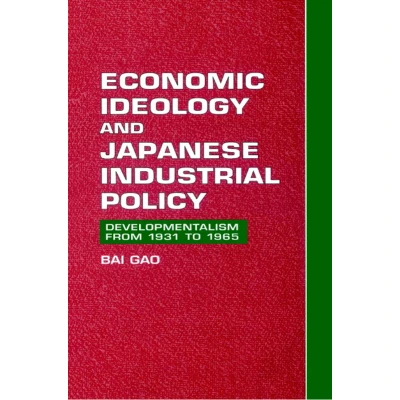
An addition to the literature on modern Japanese development, emphasizing the role of ideas and ideology. In this major addition to the literature on modern Japanese development, Bai Gao emphasizes the role of ideas and ideology in industrial policy, and explores how the Japanese themselves perceived the issue of economic development. During the Great Depression and World War II, the ideology of developmentalism - characterized by a nationalistic perspective, a production orientation, and a strategic view of the economy including restraint of market competition and rejection of the profit principle - emerged and strongly influenced policy innovation in Japan and institutional reforms in its economy. Liberal capitalism in the postwar era demilitarized the Japanese economy, and forced developmentalism to adapt to democratic political institutions and the free trade regime. Nevertheless, the economic principles that served to combat the Great Depression and sustain total war during the period 1931–45 survived. Transformed from a military to a trade strategy, developmentalism became the basic framework of Japanese industrial policy, facilitating economic growth and the development of modern economic institutions.
 Productspecificaties
| EAN |
|
|---|---|
| Maat |
|
 Prijshistorie
 Prijzen voor het laatst bijgewerkt op:
 Gerelateerde resultaten


