


€ 68,66 Gratis verzending

Uitgelicht
|
|
68,66 |
Naar shop
|

|
87,95 |
Naar shop
|

|
89,95 |
Naar shop
|
| VERGELIJK ALLE AANBIEDERS (3) | ||
 Beschrijving
Vergelijk aanbieders (3)
€ 68,66 Gratis verzending
€ 87,95 Gratis verzending
€ 89,95 Gratis verzending
Winkels met andere maten
Beschrijving
(2)
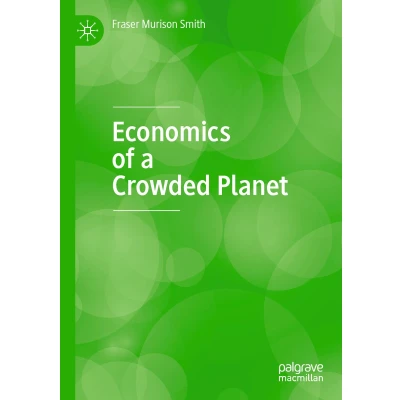
It presents a conceptual framework for a future economics drawing from systems science and hierarchy theory, integrating central concepts from present-day economics, so as to orient the field in a direction that can serve society’s future needs in practical ways. This book asks the question, how would economics look today and into the future if one started with a blank sheet of paper? Written mainly for a technical audience, yet accessible to the lay reader, Economics of a Crowded Planet addresses the ontology, epistemology and methodology of a future economics as if from outside the economy looking in. It presents a conceptual framework for a future economics drawing from systems science and hierarchy theory, integrating central concepts from present-day economics, so as to orient the field in a direction that can serve society’s future needs in practical ways. The exposition reveals a paradigm called ‘market collectivism’: the idea that the power of markets may be used to steer the economy toward a desired long-term goal. Both a prescriptive doctrine and an economic methodology, it treats the economy and nature as instances of complex, evolutionary systems, demanding analytical tools quite unlike those of the 20th-century mainstream. This book asks the question, how would economics look today and into the future if one started with a blank sheet of paper? Written mainly for a technical audience, yet accessible to the lay reader, Economics of a Crowded Planet addresses the ontology, epistemology and methodology of a future economics as if from outside the economy looking in. It presents a conceptual framework for a future economics drawing from systems science and hierarchy theory, integrating central concepts from present-day economics, so as to orient the field in a direction that can serve society’s future needs in practical ways. The exposition reveals a paradigm called ‘market planetarianism’: the idea that the power of markets may be used to steer the economy toward a desired long-term goal. Both a prescriptive doctrine and an economic methodology, it treats the economy and nature as instances of complex, evolutionary systems, demanding analytical tools quiteunlike those of the 20th-century mainstream.
BolThis book asks the question, how would economics look today and into the future if one started with a blank sheet of paper? Written mainly for a technical audience, yet accessible to the lay reader, Economics of a Crowded Planet addresses the ontology, epistemology and methodology of a future economics as if from outside the economy looking in. It presents a conceptual framework for a future economics drawing from systems science and hierarchy theory, integrating central concepts from present-day economics, so as to orient the field in a direction that can serve society’s future needs in practical ways. The exposition reveals a paradigm called ‘market planetarianism*’*: the idea that the power of markets may be used to steer the economy toward a desired long-term goal. Both a prescriptive doctrine and an economic methodology, it treats the economy and nature as instances of complex, evolutionary systems, demanding analytical tools quiteunlike those of the 20th-century mainstream.
 Productspecificaties
| EAN |
|
|---|---|
| Maat |
|
 Prijshistorie
Prijzen voor het laatst bijgewerkt op:
 Gerelateerde resultaten


