

€ 30,00 Gratis verzending

Uitgelicht
|
|
30,00 |
Naar shop
|

|
30,00 |
Naar shop
|

|
31,99 |
Naar shop
|
| VERGELIJK ALLE AANBIEDERS (3) | ||
 Beschrijving
Vergelijk aanbieders (3)
€ 30,00 Gratis verzending
€ 30,00 Gratis verzending
€ 31,99 Gratis verzending
Winkels met andere maten
Beschrijving
(1)
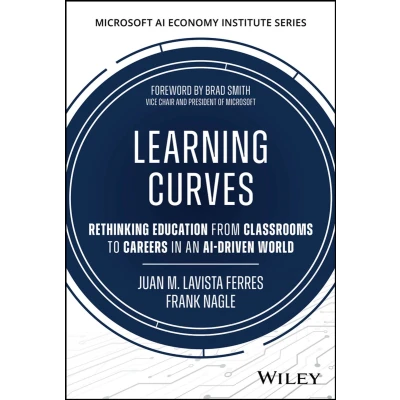
HOW AI IS TRANSFORMING EDUCATION, WORK, AND OPPORTUNITY ON A GLOBAL SCALE Generative AI is remaking the relationship between education and employment. Students already integrate AI tools into daily learning; employers increasingly expect AI fluency from new hires. Yet the pace of adoption varies dramatically across schools, industries, and nations. Understanding these patterns—where AI diffusion accelerates, where it stalls, and why—is central to ensuring that its economic benefits extend beyond a privileged few. Drawing on research assembled through the Microsoft AI Economy Institute, Juan M. Lavista Ferres and Frank Nagle bring together insights from scholars and industry experts who study AI’s intersection with K-12 teaching, vocational training, entry-level employment, and global workforce development. The result is a data-informed examination of real barriers—technical, regulatory, and cultural— alongside actionable findings for those shaping education and labor policy. Whether you lead a school district, design workforce policy, manage institutional strategy, or study the forces reshaping labor markets, this book offers a research-grounded perspective on AI’s role in education and the economy. It maps both the opportunities and the unresolved challenges, equipping readers to make informed decisions about purposeful transformation. AI's impact on education, workforce development, and global labor markets Learning Curves: Rethinking Education from Classrooms to Careers in an AI-driven World is the second book in the Microsoft AI Economy Institute series. Authored by Juan M. Lavista Ferres, Frank Nagle, and a distinguished group of international contributors, including globally recognized scholars and industry experts, this volume examines how generative AI is reshaping education systems, labor markets, and workforce development across sectors and geographies worldwide. The book examines AI's effects on K-12 teaching, community colleges, technical and vocational institutions, and entry-level employment. It investigates the barriers to AI adoption, whether they are technical, institutional, regulatory, economic, or cultural, and explores global differences in AI diffusion. Contributors offer research-backed insights for policymakers, educators, employers, and workers navigating the transition to an AI-driven economy. Readers will find: Analysis of how generative AI tools are changing experiences for both educators and students across institutional settings Research on AI's impact on entry-level jobs and evolving employer expectations for workforce readiness and skills Examination of barriers to equitable AI adoption, including technical, regulatory, economic, and cultural factors worldwide Insights drawn from the Microsoft AI Economy Institute's structured collaboration between leading scholars and industry practitioners Global-scale analysis of AI diffusion differences and their implications for education systems and labor markets Written for policymakers, educators, institutional leaders, and students as well as decision-makers and investors, this book delivers research-grounded analysis of how generative AI is transforming education and workforce development. With 86% of students already using AI in their studies and 1 in 5 Americans using AI at work, it addresses questions that demand immediate attention.
 Prijshistorie
 * Prijshistorie bevat geen data van Amazon, Amazon Marketplace.
Prijzen voor het laatst bijgewerkt op:
 Gerelateerde resultaten
 Productspecificaties


