
El Alto, Rebel City
Uitgelicht

|
34,99
32,99 |
Naar shop
|
| VERGELIJK ALLE AANBIEDERS (1) | ||
 Beschrijving
Bol
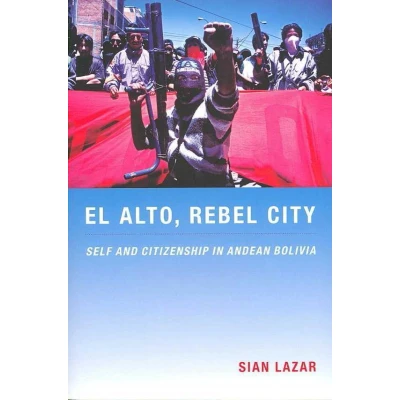
El Alto, Rebel City combines ethnography and political theory to explore the astonishing political power exercised by the indigenous citizens of El Alto, Bolivia in the past decade. Combining anthropological methods and theories with political philosophy, Sian Lazar analyzes everyday practices and experiences of citizenship in a satellite city to the Bolivian capital of La Paz: El Alto, where more than three-quarters of the population identify as indigenous Aymara. For several years, El Alto has been at the heart of resistance to neoliberal market reforms, such as the export of natural resources and the privatization of public water systems. In October 2003, protests centered in El Alto forced the Bolivian president to resign; in December 2005, the country’s first indigenous president, Evo Morales, was elected. The growth of a strong social justice movement in Bolivia has caught the imagination of scholars and political activists worldwide. El Alto remains crucial to this ongoing process. In El Alto, Rebel City Lazar examines the values, practices, and conflicts behind the astonishing political power exercised by El Alto citizens in the twenty-first century. Drawing on ethnographic fieldwork conducted between 1997 and 2004, Lazar contends that in El Alto, citizenship is a set of practices defined by one’s participation in a range of associations, many of them collectivist in nature. Her argument challenges Western liberal notions of the citizen by suggesting that citizenship is not only individual and national but in many ways communitarian and distinctly local, constituted through different kinds of affiliations. Since in El Alto these affiliations most often emerge through people’s place of residence and their occupational ties, Lazar offers in-depth analyses of neighborhood associations and trade unions. In so doing, she describes how the city’s various collectivities mediate between the state and the individual. Collective organization in El Alto and the concept of citizenship underlying it are worthy of attention; they are the basis of the city’s formidable power to mobilize popular protest.


Vergelijk aanbieders (1)

 Beschrijving
(1)
Beschrijving
(1)
El Alto, Rebel City combines ethnography and political theory to explore the astonishing political power exercised by the indigenous citizens of El Alto, Bolivia in the past decade. Combining anthropological methods and theories with political philosophy, Sian Lazar analyzes everyday practices and experiences of citizenship in a satellite city to the Bolivian capital of La Paz: El Alto, where more than three-quarters of the population identify as indigenous Aymara. For several years, El Alto has been at the heart of resistance to neoliberal market reforms, such as the export of natural resources and the privatization of public water systems. In October 2003, protests centered in El Alto forced the Bolivian president to resign; in December 2005, the country’s first indigenous president, Evo Morales, was elected. The growth of a strong social justice movement in Bolivia has caught the imagination of scholars and political activists worldwide. El Alto remains crucial to this ongoing process. In El Alto, Rebel City Lazar examines the values, practices, and conflicts behind the astonishing political power exercised by El Alto citizens in the twenty-first century. Drawing on ethnographic fieldwork conducted between 1997 and 2004, Lazar contends that in El Alto, citizenship is a set of practices defined by one’s participation in a range of associations, many of them collectivist in nature. Her argument challenges Western liberal notions of the citizen by suggesting that citizenship is not only individual and national but in many ways communitarian and distinctly local, constituted through different kinds of affiliations. Since in El Alto these affiliations most often emerge through people’s place of residence and their occupational ties, Lazar offers in-depth analyses of neighborhood associations and trade unions. In so doing, she describes how the city’s various collectivities mediate between the state and the individual. Collective organization in El Alto and the concept of citizenship underlying it are worthy of attention; they are the basis of the city’s formidable power to mobilize popular protest.
 Productspecificaties
| EAN |
|
|---|---|
| Maat |
|
 Prijshistorie
Prijzen voor het laatst bijgewerkt op:
 Gerelateerde resultaten


