








Elements in Ancient and Pre modern Economies Peasant Societies Roman Iberia
Uitgelicht

|
63,80 |
Naar shop
|
 Beschrijving
Bol
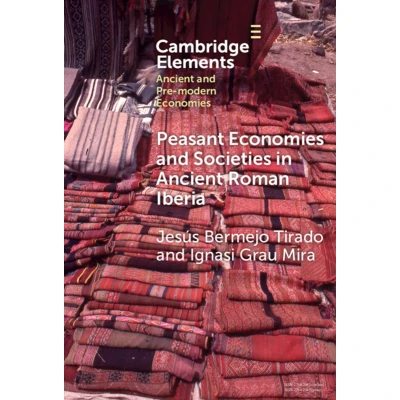
This Element revisits the historiographical and archaeological paradigms of Roman rural economies, with a particular focus on the peasant communities of Roman Iberia. Traditionally overshadowed by the dominance of the villa schiavistica model, which centers on large-scale slave-operated agricultural estates, recent interdisciplinary research has unveiled the complexity and persistence of peasant economies. By integrating data from archaeological surveys, rescue excavations, and textual analyses, this volume highlights the significance of dispersed settlements, small-scale farms, and sustainable agrarian strategies that defined the peasant landscape. Case studies from diverse sectors of the Iberian Peninsula demonstrate diverse modes of land use, such as intensive cultivation, crop rotation, and manuring, which contrast with the economic assumptions tied to elite-dominated production models. Furthermore, the author explores Roman peasants' socio-economic structures and adaptive strategies, emphasizing their pivotal role in shaping landscapes. This Element advocates for reexamining Roman peasantries as active and complex agents in ancient history.


Vergelijk aanbieders (1)

 Beschrijving
(1)
Beschrijving
(1)
This Element revisits the historiographical and archaeological paradigms of Roman rural economies, with a particular focus on the peasant communities of Roman Iberia. Traditionally overshadowed by the dominance of the villa schiavistica model, which centers on large-scale slave-operated agricultural estates, recent interdisciplinary research has unveiled the complexity and persistence of peasant economies. By integrating data from archaeological surveys, rescue excavations, and textual analyses, this volume highlights the significance of dispersed settlements, small-scale farms, and sustainable agrarian strategies that defined the peasant landscape. Case studies from diverse sectors of the Iberian Peninsula demonstrate diverse modes of land use, such as intensive cultivation, crop rotation, and manuring, which contrast with the economic assumptions tied to elite-dominated production models. Furthermore, the author explores Roman peasants' socio-economic structures and adaptive strategies, emphasizing their pivotal role in shaping landscapes. This Element advocates for reexamining Roman peasantries as active and complex agents in ancient history.
 Productspecificaties
| EAN |
|
|---|---|
| Maat |
|
 Prijshistorie
Prijzen voor het laatst bijgewerkt op:
 Gerelateerde resultaten


