
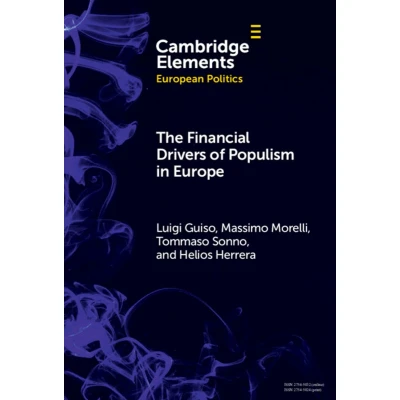
Elements in European Politics-The Financial Drivers of Populism Europe
Uitgelicht

|
63,99 |
Naar shop
|

|
113,90 |
Naar shop
|

|
113,90 |
Naar shop
|
| VERGELIJK ALLE AANBIEDERS (3) | ||
 Beschrijving
Bol
This Element argues that the 2008 financial crisis marked a turning point for populism in Europe by extending economic insecurity to the middle class. As insecurity spread, trust in institutions and markets declined, bringing a large new group of disillusioned voters into the political arena. The authors show that this expansion of middle-class anxiety accounts for a substantial share of the rise in populist voting. The political impact was strongest in countries with limited fiscal space, where governments lacked credible tools to cushion economic losses. As voters' demand for protection grew, both new and established parties adjusted their platforms, with populist and protectionist positions becoming more prominent. Using a novel empirical strategy based on differences in occupational exposure to financial constraints, the authors identify the causal effect of crisis-driven insecurity and explain why populism has persisted in European politics. This title is also available as Open Access on Cambridge Core.


 Beschrijving
(1)
Beschrijving
(1)
This Element argues that the 2008 financial crisis marked a turning point for populism in Europe by extending economic insecurity to the middle class. As insecurity spread, trust in institutions and markets declined, bringing a large new group of disillusioned voters into the political arena. The authors show that this expansion of middle-class anxiety accounts for a substantial share of the rise in populist voting. The political impact was strongest in countries with limited fiscal space, where governments lacked credible tools to cushion economic losses. As voters' demand for protection grew, both new and established parties adjusted their platforms, with populist and protectionist positions becoming more prominent. Using a novel empirical strategy based on differences in occupational exposure to financial constraints, the authors identify the causal effect of crisis-driven insecurity and explain why populism has persisted in European politics. This title is also available as Open Access on Cambridge Core.
 Productspecificaties
 Prijshistorie
* Prijshistorie bevat geen data van Amazon, Amazon Marketplace.
Prijzen voor het laatst bijgewerkt op:
 Gerelateerde resultaten


