








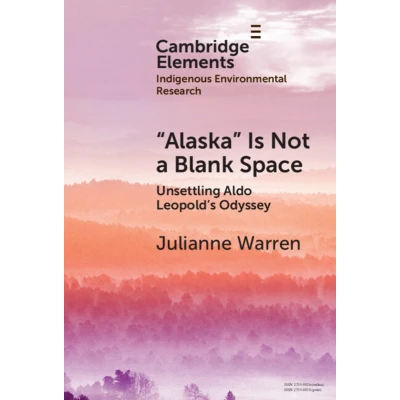
Elements in Indigenous Environmental Research ‘Alaska’ is Not a Blank Space
Uitgelicht

|
63,80 |
Naar shop
|
 Beschrijving
Bol
This Element supports Gwich'in, Iñupiat, and all Alaska Natives' collective continuance and reparative justice from the perspective of a settler in the traditional territories of lower Tanana Dene Peoples. It stands with Alaska Natives' recovering and safe-keeping: kinships obstructed by settler-colonialism; ontologies and languages inseparable from land-relations and incommensurable with English-language perspectives; and epistemologies not beholden to any colonialist standard. These rights and responsibilities clash with Leopoldian conservation narratives still shaping mind-sets and institutions that eliminate Indigenous Peoples by telling bad history and by presuming entitlements to lands and norm-making authority. It models an interlocking method and methodology – surfacing white supremacist settler-colonialist assumptions and structures of Leopoldian conservation narratives – that may be adapted to critique other problematic legacies. It offers a pra xis of anti-colonialist, anti-racist, liberatory environmental-narrative critical-assessment centering Indigenous experts and values, including consent, diplomacy, and intergenerational respect needed for stable coalitions-making for climate and environmental justice.


Vergelijk aanbieders (1)

 Beschrijving
(1)
Beschrijving
(1)
This Element supports Gwich'in, Iñupiat, and all Alaska Natives' collective continuance and reparative justice from the perspective of a settler in the traditional territories of lower Tanana Dene Peoples. It stands with Alaska Natives' recovering and safe-keeping: kinships obstructed by settler-colonialism; ontologies and languages inseparable from land-relations and incommensurable with English-language perspectives; and epistemologies not beholden to any colonialist standard. These rights and responsibilities clash with Leopoldian conservation narratives still shaping mind-sets and institutions that eliminate Indigenous Peoples by telling bad history and by presuming entitlements to lands and norm-making authority. It models an interlocking method and methodology – surfacing white supremacist settler-colonialist assumptions and structures of Leopoldian conservation narratives – that may be adapted to critique other problematic legacies. It offers a pra xis of anti-colonialist, anti-racist, liberatory environmental-narrative critical-assessment centering Indigenous experts and values, including consent, diplomacy, and intergenerational respect needed for stable coalitions-making for climate and environmental justice.
 Productspecificaties
| EAN |
|
|---|---|
| Maat |
|
 Prijshistorie
Prijzen voor het laatst bijgewerkt op:
 Gerelateerde resultaten


