


€ 98,60 Gratis verzending

Uitgelicht
|
|
98,60 |
Naar shop
|
| VERGELIJK ALLE AANBIEDERS (1) | ||
 Beschrijving
Vergelijk aanbieders (1)
€ 98,60 Gratis verzending
Winkels met andere maten
Beschrijving
(1)
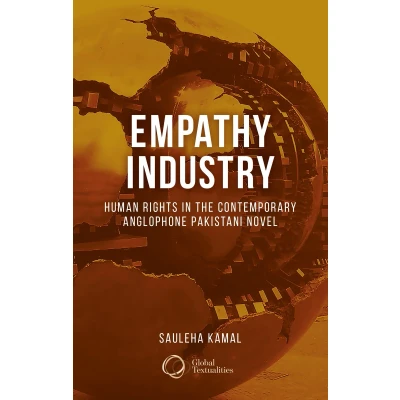
Empathy industry examines how global markets shape fiction about the Global South for Global North consumption. Through the case of the post-9/11 anglophone Pakistani novel, it offers a sharp critique of human rights storytelling with implications for world literature at large. Empathy industry argues that the focus on human rights in prominent anglophone Pakistani novels is connected to the positioning of world literature as a vehicle for empathy in the Anglo-American contemporary world literary marketplace. It introduces the idea of the empathy industry, to describe the phenomenon where the world literary marketplace emphasises human rights discourse and politics in novels concerned with the Global South. Combining materialist scholarship on world literature and the global literary marketplace with scepticism about the function of literature as a tool for cross-cultural empathy, this book examines the real and imagined audiences of these novels in light of theoretical claims in literary theory, political theory and philosophy. The texts discussed, Mohsin Hamid’s The Reluctant Fundamentalist, Kamila Shamsie’s Home Fire and Best of Friends, Fatima Bhutto’s The Runaways, Nadeem Aslam’s The Golden Legend and Mohammed Hanif’s Our Lady of Alice Bhatti, are chosen for the prominence of their writers within the category. They share a desire to better the world through representations of human rights. The nature of these representations, however, is, to varying degrees, manufactured for a Global North readership – something that is implicit in the choices made in these texts and is made explicit through the discourse surrounding them. This study provides agenda-setting insights into how empathy functions in contemporary world literature. Empathy industry investigates how contemporary anglophone Pakistani novels engage with human rights discourse within a global literary economy shaped by Anglo-American tastes. It introduces the concept of the empathy industry to show how narratives about the Global South are structured to generate moral sentiment among readers in the Global North. Through close readings of major works by Mohsin Hamid, Kamila Shamsie, Fatima Bhutto, Nadeem Aslam and Mohammed Hanif, the book examines how depictions of suffering, justice and political identity are shaped by market expectations. Combining literary analysis with political and ethical inquiry, it questions the limits of empathy as a cross-cultural ideal in postcolonial contexts. It offers an analytically grounded account of how human rights storytelling circulates within world literature and how the global marketplace influences the production and reception of Pakistani fiction.
 Productspecificaties
| EAN |
|
|---|---|
| Maat |
|
 Prijshistorie
 Prijzen voor het laatst bijgewerkt op:
 Gerelateerde resultaten


