
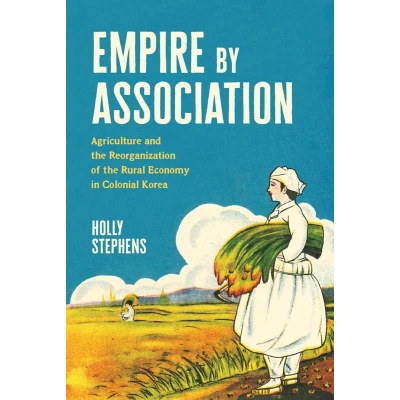
Empire by Association: Agriculture and the Reorganization of Rural Economy in Colonial Korea
Uitgelicht

|
72,99 |
Naar shop
|
| VERGELIJK ALLE AANBIEDERS (1) | ||
 Beschrijving
Bol
How governmental associations shaped agricultural production in Korea during Japan’s colonization Drawing on the diaries of everyday farmers, Holly Stephens examines the introduction of scientific and commercial agriculture in Korea from the late nineteenth century through liberation from Japanese rule in 1945. After Japan annexed Korea in 1910, colonial bureaucrats introduced numerous agricultural policies as they sought to turn Korea into a useful imperial possession. In particular, the colonial government hoped to establish Korea as a source of raw materials. To support the necessary increase in cultivation, it created policies introducing new cultivars, new farming methods, and new procedures for crop sales. Yet nature and farmers alike defied the expectations of colonial planners. To demonstrate how the colonial infrastructure of scientific agriculture was experienced and interpreted by ordinary farmers, Stephens traces the implementation of colonial agricultural policies through a series of semi-governmental associations, which were the main agents of the colonial state in the rural economy. As these associations became embedded within the rural economy, they took on significance not just as a representation of the government but also as a conduit of new exchange networks and understandings of agriculture based on scientific and commercial principles, issues that would continue to influence agricultural production even after liberation.


Vergelijk aanbieders (1)

 Beschrijving
(1)
Beschrijving
(1)
How governmental associations shaped agricultural production in Korea during Japan’s colonization Drawing on the diaries of everyday farmers, Holly Stephens examines the introduction of scientific and commercial agriculture in Korea from the late nineteenth century through liberation from Japanese rule in 1945. After Japan annexed Korea in 1910, colonial bureaucrats introduced numerous agricultural policies as they sought to turn Korea into a useful imperial possession. In particular, the colonial government hoped to establish Korea as a source of raw materials. To support the necessary increase in cultivation, it created policies introducing new cultivars, new farming methods, and new procedures for crop sales. Yet nature and farmers alike defied the expectations of colonial planners. To demonstrate how the colonial infrastructure of scientific agriculture was experienced and interpreted by ordinary farmers, Stephens traces the implementation of colonial agricultural policies through a series of semi-governmental associations, which were the main agents of the colonial state in the rural economy. As these associations became embedded within the rural economy, they took on significance not just as a representation of the government but also as a conduit of new exchange networks and understandings of agriculture based on scientific and commercial principles, issues that would continue to influence agricultural production even after liberation.
 Productspecificaties
| EAN |
|
|---|---|
| Maat |
|
 Prijshistorie
Prijzen voor het laatst bijgewerkt op:
 Gerelateerde resultaten


