


€ 32,99 Gratis verzending

Uitgelicht
|
|
32,99 |
Naar shop
|
| VERGELIJK ALLE AANBIEDERS (1) | ||
 Beschrijving
Vergelijk aanbieders (1)
€ 32,99 Gratis verzending
Winkels met andere maten
Beschrijving
(1)
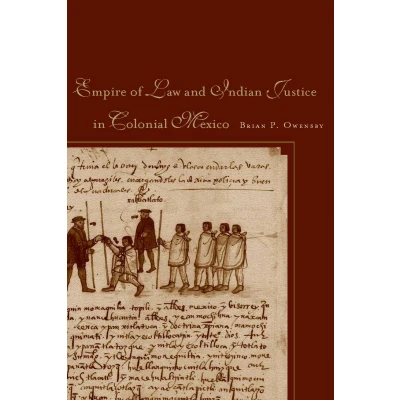
Empire of Law shows how seventeenth-century Indian claimants, by litigating and petitioning before Mexico City tribunals, became full participants in an early modern cosmopolitan legality that gave rise to a colonial politics of justice that struggled, with some success, against the utter degradation of subject peoples. Empire of Law and Indian Justice in Colonial Mexico shows how Indian litigants and petitioners made sense of Spanish legal principles and processes when the dust of conquest had begun to settle after 1600. By juxtaposing hundreds of case records with written laws and treatises, Owensby reveals how Indians saw the law as a practical and moral resource that allowed them to gain a measure of control over their lives and to forge a relationship to a distant king. Several chapters elucidate central concepts of Indian claimants in their encounter with the law over the seventeenth century—royal protection, possession of property, liberty, notions of guilt, village autonomy and self-rule, and subjecthood. Owensby concludes that Indian engagement with Spanish law was the first early modern experiment in cosmopolitan legality, one that faced the problem of difference head on and sought to bridge the local and the international. In so doing, it enabled indigenous claimants to forge a colonial politics of justice that opened up space for a conversation between colonial rulers and ruled.
 Productspecificaties
| EAN |
|
|---|---|
| Maat |
|
 Prijshistorie
 Prijzen voor het laatst bijgewerkt op:
 Gerelateerde resultaten


