

€ 32,25 Gratis verzending

Uitgelicht
|
|
32,25 |
Naar shop
|

|
32,25 |
Naar shop
|

|
33,99 |
Naar shop
|
| VERGELIJK ALLE AANBIEDERS (3) | ||
 Beschrijving
Vergelijk aanbieders (3)
€ 32,25 Gratis verzending
€ 32,25 Gratis verzending
€ 33,99 Gratis verzending
Winkels met andere maten
Beschrijving
(1)
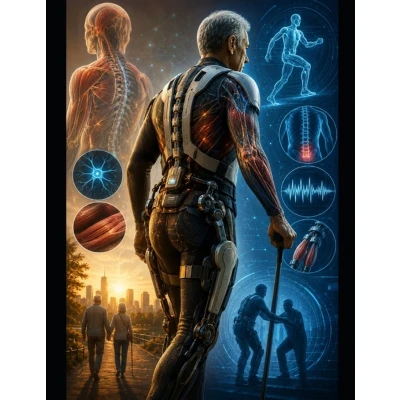
Aging is not merely a medical challenge. It is one of the greatest engineering challenges of the twenty-first century.Every year, millions of people lose strength, mobility, balance, and independence as the biological systems that once powered effortless movement gradually decline. As global populations age and healthcare systems struggle to keep pace, a fundamental question emerges: Can human mobility be engineered?Engineering Human Mobility provides a comprehensive and deeply interdisciplinary exploration of the science and engineering foundations behind intelligent assistive exosuits and human augmentation technologies. Combining gerontology, biomechanics, neuromuscular physiology, soft robotics, wearable systems, and human-machine interaction, this volume builds the essential knowledge required to understand how advanced mobility-assistance technologies are designed and deployed.Inside, readers will explore: The global demographic transformation driving demand for augmentation technologiesThe biology of aging, sarcopenia, frailty, and declining human performanceBiomechanics of gait, balance, posture, and human movementSoft robotic actuators, artificial muscles, and wearable assistive systemsSurface electromyography (sEMG) and neuromuscular signal acquisitionHuman intent detection and the foundations of intelligent human-machine interfacesEngineering principles behind next-generation mobility augmentation systemsWritten for engineers, researchers, students, healthcare innovators, roboticists, rehabilitation specialists, and technology leaders, this volume establishes the scientific and engineering foundation for one of the most transformative technological revolutions of our era.Before intelligent exosuits can enhance human mobility, we must first understand the human body they are designed to assist.This is where that journey begins.
 Prijshistorie
 * Prijshistorie bevat geen data van Amazon, Amazon Marketplace.
Prijzen voor het laatst bijgewerkt op:
 Gerelateerde resultaten
 Productspecificaties


