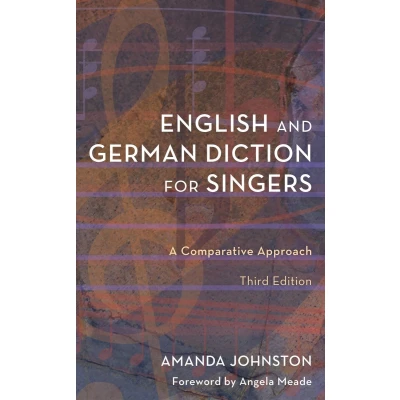

English and German Diction for Singers

Prijzen vanaf
28,98

Uitgelicht

VERGELIJK ALLE AANBIEDERS (2)

Beschrijving

Bol Partner This resource offers a thorough analysis of the German and English languages and includes oral drills, word lists, tables, charts, musical examples, and tongue twisters. Unique to this publication is the illustration of the rhythmic timing and release of consonants within the International Phonetic Alphabet transcriptions in all musical examples. Lyric diction is a portal to powerful and meaningful vocal performance because diction enables singers to communicate the vision of both the poet and the composer. The study of diction involves learning to perceive speech patterns in different languages, practicing their precise articulation, recognizing this in speech and singing, and developing an awareness of the refined movements of the articulators and their effects on singing tone. In the second edition of English and German Diction for Singers, Amanda Johnston continues her comparative, modernized approach to lyric diction. This comprehensive resource offers a thorough analysis of the German and English languages and includes extensive oral drills, word lists, tables, charts, musical examples, and even tongue twisters. Unique to this publication is the illustration of the rhythmic timing and release of consonants within the International Phonetic Alphabet transcriptions in all musical examples. This book is designed for both undergraduate and graduate courses in German and English lyric diction and is an invaluable resource for classical singers, vocal coaches, and voice teachers alike. Improvements to the second edition include: ·An online workbook that includes extensive written exercises suitable for classroom or independent use ·Chapter-by-chapter video clips that demonstrate the concepts addressed in the text ·Expanded chapters address the schwa, the treatment of monosyllabic incidental words, the use of R, and the correct formation of the elusive upsilon and extended epsilon ·Consideration of loan words and stressed vs. unstressed closed German vowels ·Integrated practice drills for mastering challenging and unfamiliar phonemes ·Enlarged musical examples show the rhythmic timing and release of voiced and voiceless consonants ·An expanded appendix on suggested repertoire for diction study ·Inclusion of specific diction choices suitable for musical theatre repertoire ·Expanded discussion of healthy glottal onsets, including the concept of juncture ·Use of the latest resources, namely Deutsche Rechtschreibung (2014) and Cambridge Pronouncing Dictionary, 18th edition (2011) ·For all users, there is a WORKBOOK. Access the workbook here. ·The ANSWER KEY is available for instructors. Contact [email protected] for details.

Vergelijk aanbieders (2)

Shop
Prijs
Verzendkosten
Totale prijs
28,98
Gratis
28,98
Naar shop
Gratis Shipping Costs
36,25
gebruikt
Gratis
36,25
Naar shop
Gratis Shipping Costs
Beschrijving (2)
Bol Partner

This resource offers a thorough analysis of the German and English languages and includes oral drills, word lists, tables, charts, musical examples, and tongue twisters. Unique to this publication is the illustration of the rhythmic timing and release of consonants within the International Phonetic Alphabet transcriptions in all musical examples. Lyric diction is a portal to powerful and meaningful vocal performance because diction enables singers to communicate the vision of both the poet and the composer. The study of diction involves learning to perceive speech patterns in different languages, practicing their precise articulation, recognizing this in speech and singing, and developing an awareness of the refined movements of the articulators and their effects on singing tone. In the second edition of English and German Diction for Singers, Amanda Johnston continues her comparative, modernized approach to lyric diction. This comprehensive resource offers a thorough analysis of the German and English languages and includes extensive oral drills, word lists, tables, charts, musical examples, and even tongue twisters. Unique to this publication is the illustration of the rhythmic timing and release of consonants within the International Phonetic Alphabet transcriptions in all musical examples. This book is designed for both undergraduate and graduate courses in German and English lyric diction and is an invaluable resource for classical singers, vocal coaches, and voice teachers alike. Improvements to the second edition include: ·An online workbook that includes extensive written exercises suitable for classroom or independent use ·Chapter-by-chapter video clips that demonstrate the concepts addressed in the text ·Expanded chapters address the schwa, the treatment of monosyllabic incidental words, the use of R, and the correct formation of the elusive upsilon and extended epsilon ·Consideration of loan words and stressed vs. unstressed closed German vowels ·Integrated practice drills for mastering challenging and unfamiliar phonemes ·Enlarged musical examples show the rhythmic timing and release of voiced and voiceless consonants ·An expanded appendix on suggested repertoire for diction study ·Inclusion of specific diction choices suitable for musical theatre repertoire ·Expanded discussion of healthy glottal onsets, including the concept of juncture ·Use of the latest resources, namely Deutsche Rechtschreibung (2014) and Cambridge Pronouncing Dictionary, 18th edition (2011) ·For all users, there is a WORKBOOK. Access the workbook here. ·The ANSWER KEY is available for instructors. Contact [email protected] for details.

Bol

Amanda Johnston provides a comprehensive resource offering a modern approach to lyric diction and a thorough analysis of German and English. The third edition expands the discussion of many crucial concepts, such as stylistic diction choices for musical theatre, the varied treatment of “R” across genres, healthy glottal onsets, and the correct formation of the elusive upsilon, the curly-tail “J,” and the extended epsilon. Unique features include the deconstruction of the schwa and the illustration of the rhythmic timing and release of consonants within musical examples. The book includes extensive oral drills, musical examples, as well as a multimedia package of chapter-by-chapter video clips and an e-workbook on IPA character transcription. It is designed for the study of both English and German lyric diction, either consecutively or simultaneously, and is a valuable resource for singers, vocal coaches, voice teachers, and collaborative pianists alike.


Productspecificaties

EAN
  • 9781538193730
  • 9781442260894
Maat


Prijshistorie

Prijzen voor het laatst bijgewerkt op:

Uitgelichte Keuze
28,98
Naar shop
