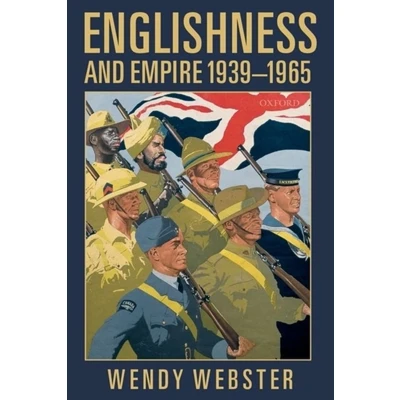

Englishness and Empire 1939 1965

Prijzen vanaf
42,78

Uitgelicht

VERGELIJK ALLE AANBIEDERS (2)

Beschrijving

Bol Partner Was the British empire given away in a fit of collective indifference? This work looks at connections between stories of empire told in the media - the Second World War, the Coronation and Everest, colonial wars of the 1950s, immigration, Winston Churchill's funeral - and contributes to debates about the domestic consequences of the end of empire. Did loss of imperial power and the end of empire have any significant impact on British culture and identity after 1945? Within a burgeoning literature on national identity and what it means to be British this is a question that has received surprisingly little attention. Englishness and Empire makes an important and original contribution to recent debates about the domestic consequences of the end of empire. Wendy Webster explores popular narratives of nation in the mainstream media archive - newspapers, newsreels, radio, film, and television. The contours of the study generally follow stories told through prolific filmic and television imagery: the Second World War, the Coronation and Everest, colonial wars of the 1950s, and Winston Churchill's funeral. The book analyses three main narratives that conflicted and collided in the period - a Commonwealth that promised to maintain Britishness as a global identity; siege narratives of colonial wars and immigration that showed a 'little England' threatened by empire and its legacies; and a story of national greatness, celebrating the martial masculinity of British officers and leaders, through which imperial identity leaked into narratives of the Second World War developed after 1945. The book also explores the significance of America to post-imperial Britain. Englishness and Empire considers how far, and in what contexts and unexpected places, imperial identity and loss of imperial power resonated in popular narratives of nataion. As the first monograph to investigate the significance of empire and its legacies in shaping national identity after 1945, this is an important study for all scholars interested in questions of national identity and their intersections with gender, race, empire, immigration, and decolonization.

Vergelijk aanbieders (2)

Shop
Prijs
Verzendkosten
Totale prijs
42,78
gebruikt
Gratis
42,78
Naar shop
Gratis Shipping Costs
48,71
Gratis
48,71
Naar shop
Gratis Shipping Costs
Beschrijving (2)
Bol Partner

Was the British empire given away in a fit of collective indifference? This work looks at connections between stories of empire told in the media - the Second World War, the Coronation and Everest, colonial wars of the 1950s, immigration, Winston Churchill's funeral - and contributes to debates about the domestic consequences of the end of empire. Did loss of imperial power and the end of empire have any significant impact on British culture and identity after 1945? Within a burgeoning literature on national identity and what it means to be British this is a question that has received surprisingly little attention. Englishness and Empire makes an important and original contribution to recent debates about the domestic consequences of the end of empire. Wendy Webster explores popular narratives of nation in the mainstream media archive - newspapers, newsreels, radio, film, and television. The contours of the study generally follow stories told through prolific filmic and television imagery: the Second World War, the Coronation and Everest, colonial wars of the 1950s, and Winston Churchill's funeral. The book analyses three main narratives that conflicted and collided in the period - a Commonwealth that promised to maintain Britishness as a global identity; siege narratives of colonial wars and immigration that showed a 'little England' threatened by empire and its legacies; and a story of national greatness, celebrating the martial masculinity of British officers and leaders, through which imperial identity leaked into narratives of the Second World War developed after 1945. The book also explores the significance of America to post-imperial Britain. Englishness and Empire considers how far, and in what contexts and unexpected places, imperial identity and loss of imperial power resonated in popular narratives of nataion. As the first monograph to investigate the significance of empire and its legacies in shaping national identity after 1945, this is an important study for all scholars interested in questions of national identity and their intersections with gender, race, empire, immigration, and decolonization.

Bol

Did loss of imperial power and the end of empire have any significant impact on British culture and identity after 1945? Within a burgeoning literature on national identity and what it means to be British this is a question that has received surprisingly little attention. Englishness and Empire makes an important and original contribution to recent debates about the domestic consequences of the end of empire. Wendy Webster explores popular narratives of nation in the mainstream media archive - newspapers, newsreels, radio, film, and television. The contours of the study generally follow stories told through prolific filmic and television imagery: the Second World War, the Coronation and Everest, colonial wars of the 1950s, and Winston Churchill's funeral. The book analyses three main narratives that conflicted and collided in the period - a Commonwealth that promised to maintain Britishness as a global identity; siege narratives of colonial wars and immigration that showed a 'little England' threatened by empire and its legacies; and a story of national greatness, celebrating the martial masculinity of British officers and leaders, through which imperial identity leaked into narratives of the Second World War developed after 1945. The book also explores the significance of America to post-imperial Britain. Englishness and Empire considers how far, and in what contexts and unexpected places, imperial identity and loss of imperial power resonated in popular narratives of nataion. As the first monograph to investigate the significance of empire and its legacies in shaping national identity after 1945, this is an important study for all scholars interested in questions of national identity and their intersections with gender, race, empire, immigration, and decolonization.


Productspecificaties

EAN
  • 9780199226641
  • 9780191647574
  • 9780199258604
Maat


Prijshistorie

Prijzen voor het laatst bijgewerkt op:

Uitgelichte Keuze
42,78
Naar shop
