
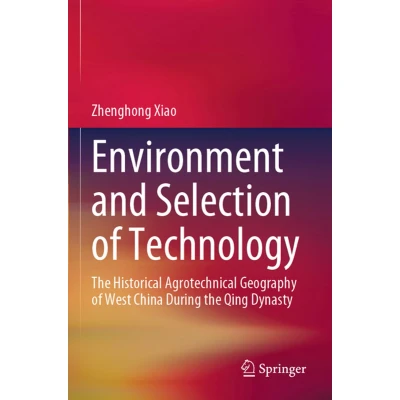
Environment and Selection of Technology: the Historical Agrotechnical Geography West China During Qing Dynasty
Uitgelicht

|
123,63 |
Naar shop
|

|
123,63 |
Naar shop
|

|
135,00 |
Naar shop
|
| VERGELIJK ALLE AANBIEDERS (3) | ||
 Beschrijving
Bol
This book makes an insightful investigation of historical agrotechnical geography in West China in the Qing Dynasty from the perspective of historical geography and the history of agricultural technology. This study first divides West China into four regions, i.e., the Loess Plateau, Northwest China except the Loess Plateau, the Qinghai-Tibet Plateau, and Southwest China. Based on a systematic analysis of the geographical factors, such as heat, moisture, topography, soil, this study discusses the distribution and differentiation of the major technology types in these regions, ranging from the most primitive shifting cultivation and extensive cultivation to the most intensive cultivation, which are manifested in the crop structure and distribution, planting technology, water conservancy, tools, etc., as well as various combinations of these technologies. The diverse types and forms of technology and their specific combinations in different geographical spaces are mainly determined bythe diverse environmental conditions, which embodies the multi-factor correlation between technology mode and geographical environment and the internal unity of regional agricultural technology mode. In addition to the relationship between agricultural technology and geographical factors, it also takes social-economic, religious, and other cultural factors as important parameters, which were unique in West China, and significantly influence the trend of agrotechnological development. Through this study, it constructs the basic theoretical framework of historical agrotechnical geography and enlarges the scope of historical geography studies. And, since the author chose West China in the Qing Dynasty as the research subject, which was characterized by significant diversity and complexity in terms of natural geographical factors and socio-economic circumstances like religion and customs, this study provides a typical case for in-depth understanding of West China, so it is still of great academic value and important practical significance for the development of West China today.


 Beschrijving
(1)
Beschrijving
(1)
This book makes an insightful investigation of historical agrotechnical geography in West China in the Qing Dynasty from the perspective of historical geography and the history of agricultural technology. This study first divides West China into four regions, i.e., the Loess Plateau, Northwest China except the Loess Plateau, the Qinghai-Tibet Plateau, and Southwest China. Based on a systematic analysis of the geographical factors, such as heat, moisture, topography, soil, this study discusses the distribution and differentiation of the major technology types in these regions, ranging from the most primitive shifting cultivation and extensive cultivation to the most intensive cultivation, which are manifested in the crop structure and distribution, planting technology, water conservancy, tools, etc., as well as various combinations of these technologies. The diverse types and forms of technology and their specific combinations in different geographical spaces are mainly determined bythe diverse environmental conditions, which embodies the multi-factor correlation between technology mode and geographical environment and the internal unity of regional agricultural technology mode. In addition to the relationship between agricultural technology and geographical factors, it also takes social-economic, religious, and other cultural factors as important parameters, which were unique in West China, and significantly influence the trend of agrotechnological development. Through this study, it constructs the basic theoretical framework of historical agrotechnical geography and enlarges the scope of historical geography studies. And, since the author chose West China in the Qing Dynasty as the research subject, which was characterized by significant diversity and complexity in terms of natural geographical factors and socio-economic circumstances like religion and customs, this study provides a typical case for in-depth understanding of West China, so it is still of great academic value and important practical significance for the development of West China today.
 Productspecificaties
 Prijshistorie
* Prijshistorie bevat geen data van Amazon, Amazon Marketplace.
Prijzen voor het laatst bijgewerkt op:
 Gerelateerde resultaten


