
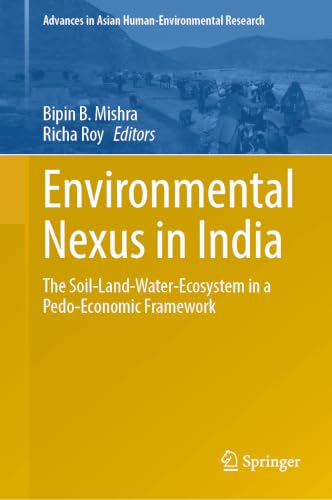
Environmental Nexus in India: The Soil Land Water Ecosystem a Pedo Economic Framework
Uitgelicht
|
159,00 |
Naar shop
|
|
171,19 |
Naar shop
|
|
171,19 |
Naar shop
|
Beschrijving
Bol
Organic matter is vital for soil health and climate resilience but deficient in most Indian soils, with consequences for climate change mitigation through carbon sequestration and biodiversity-supported ecosystem services. Sustainable agricultural management can be assessed using FAO-based parametric land evaluation approaches. These strategies are accessible to farmers, especially in polluted areas like New Delhi that suffer from air, water, and soil pollution together with multiple climate barriers. The environmental nexus approach examines interconnections, linkages, synergies, and trade-offs among soil, land, water, energy, food, and ecosystems. Key indicators include soil, land, and water quality and availability. Organic matter is vital for soil health and climate resilience but deficient in most Indian soils, with consequences for climate change mitigation through carbon sequestration and biodiversity-supported ecosystem services. Practices such as composting, biochar from crop residues, crop rotation, reduced chemical inputs, and renewable energy use can enhance sustainability with improved soil resilience. Sustainability is thus closely linked to regenerative approaches within agricultural management systems following landuse planning.
Prijshistorie
* Prijshistorie bevat geen data van Amazon, Amazon Marketplace.
Prijzen voor het laatst bijgewerkt op: