


€ 155,00 Gratis verzending

Uitgelicht
|
|
155,00 |
Naar shop
|

|
167,16 |
Naar shop
|

|
167,16 |
Naar shop
|
| VERGELIJK ALLE AANBIEDERS (3) | ||
 Beschrijving
Vergelijk aanbieders (3)
€ 155,00 Gratis verzending
€ 167,16 Gratis verzending
€ 167,16 Gratis verzending
Winkels met andere maten
Beschrijving
(1)
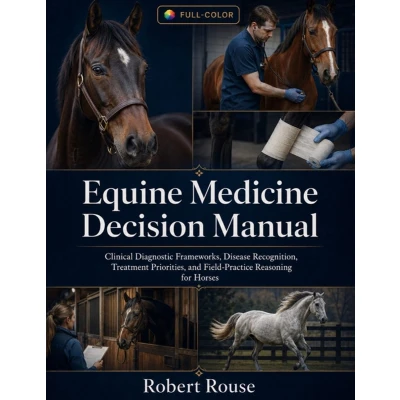
Equine medical cases rarely arrive as clear textbook diagnoses. They begin with a horse that is uncomfortable, off feed, losing condition, breathing differently, moving abnormally, showing fever, declining with age, or simply "not right." In those moments, the most valuable skill is knowing how to think from first presentation to clinical priority, so decisions become calmer, safer, and more organized.Equine Medicine Decision Manual is a practical, full-color clinical reasoning guide for equine medical assessment, disease recognition, treatment priorities, and field-practice decision-making. Written for veterinary students, equine practitioners, mixed-animal veterinarians, technicians, and serious horse professionals, this manual helps readers move beyond memorizing disease lists and build a structured approach to real equine cases.Across 20 focused chapters, Robert Rouse guides readers through the clinical patterns that shape everyday equine medicine: history taking, physical examination, vital sign interpretation, triage, colic, diarrhea, respiratory disease, fever, weight loss, neurologic signs, lameness screening, dermatology, endocrine and metabolic disease, geriatric fragility, foal assessment, sudden deterioration, referral decisions, and case closure. The experience is practical and decision-oriented, helping readers understand what to look for, what findings matter most, when to monitor, when to escalate, and how to communicate risk clearly in the field.Inside, readers will learn how to: - Think from presentation to priority - organize equine cases by urgency, clinical pattern, and decision-making value instead of jumping too quickly to a diagnosis.- Recognize high-risk findings early - interpret pain, hydration, mucous membranes, heart rate, respiratory effort, fever, weakness, diarrhea, poor nursing, weight loss, and sudden deterioration in context.- Use field-practice reasoning effectively - decide which diagnostics, treatments, monitoring steps, management changes, or referral recommendations are most appropriate for the horse in front of you.- Connect individual cases to broader risk - understand when one horse may signal a larger facility problem involving infectious disease, feed, water, environment, parasites, biosecurity, or management.Designed as a compact professional manual, Equine Medicine Decision Manual gives readers a clearer way to approach equine medical cases with structure, confidence, and clinical discipline. It is built for the moments when the next decision matters: what to check, what to prioritize, what to watch, and when the safest answer is to escalate.
 Prijshistorie
 * Prijshistorie bevat geen data van Amazon, Amazon Marketplace.
Prijzen voor het laatst bijgewerkt op:
 Gerelateerde resultaten
 Productspecificaties


