

€ 22,99 Gratis verzending

Gesponsorde links
|
|
22,99 |
Naar shop
|

|
22,99 |
Naar shop
|

|
24,99 |
Naar shop
|
| VERGELIJK ALLE AANBIEDERS (3) | ||
 Beschrijving
Vergelijk aanbieders (3)
Gesponsorde links · Sommige shops betalen ons een vergoeding
€ 22,99 Gratis verzending
€ 22,99 Gratis verzending
€ 24,99 € 2,99 verzendkosten Totaal € 27,98
Winkels met andere maten
Beschrijving
(1)
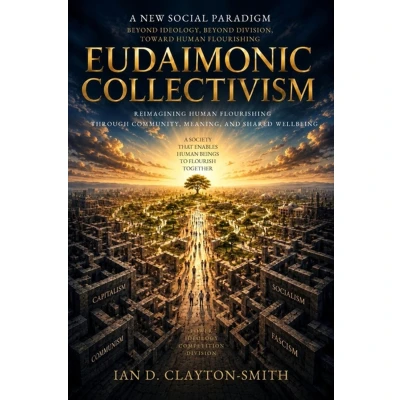
What if human flourishing is not something we achieve alone?Psychology has taught us much about happiness, meaning, purpose, personal growth, and wellbeing. Yet many theories of flourishing remain centred on the individual. They ask what enables a person to live well, while paying less attention to the relationships, communities, institutions, and social conditions within which human lives unfold.Eudaimonic Collectivism offers a different way of thinking about the good life.Developed from doctoral research exploring eudaimonic wellbeing within the international community of Auroville, India, and subsequently extended through psychological, philosophical, and interdisciplinary scholarship, Eudaimonic Collectivism proposes that individual and collective flourishing may become mutually reinforcing.At its centre is a simple but far-reaching relationship: Individual flourishing relational and participatory processes collective flourishingThrough belonging, meaningful autonomy, authentic relationships, purposeful participation, personal growth, shared purpose, and valued contribution, people may help create the environments within which they themselves-and others-are better able to flourish.But this is not an argument for conformity or the supremacy of the collective over the individual. Nor is it a political blueprint or an idealisation of communal life. Eudaimonic Collectivism asks a more fundamental question. What kinds of social conditions allow individuality and collective life to strengthen rather than diminish one another?Drawing together psychology, philosophy, community, economics, social organisation, ecological pressures, and the emerging implications of artificial intelligence, the book considers what flourishing might mean in a world undergoing profound change. As technology transforms work and productivity, and societies confront questions of sustainability, inequality, belonging, purpose, and human contribution, the distinction between economic value and human value becomes increasingly important.The book ultimately challenges us to reconsider where flourishing is located. Perhaps wellbeing is neither solely an individual achievement nor simply a property of society. Perhaps it emerges partly through the reciprocal relationship between people and the worlds they create together.Eudaimonic Collectivism is an invitation to rethink the good life-not only as a question of how each of us might flourish, but of how we might flourish together.
 Prijshistorie
* Prijshistorie bevat geen data van Amazon, Amazon Marketplace.
Prijzen voor het laatst bijgewerkt op:
 Gerelateerde resultaten
 Productspecificaties


