


€ 18,00 € 2,99 verzendkosten Totaal € 20,99

Gesponsorde links
|
|
18,00 |
Naar shop
|

|
18,32 |
Naar shop
|

|
18,32 |
Naar shop
|
| VERGELIJK ALLE AANBIEDERS (3) | ||
 Beschrijving
Vergelijk aanbieders (3)
Gesponsorde links · Sommige shops betalen ons een vergoeding
€ 18,00 € 2,99 verzendkosten Totaal € 20,99
€ 18,32 Gratis verzending
€ 18,32 Gratis verzending
Winkels met andere maten
Beschrijving
(1)
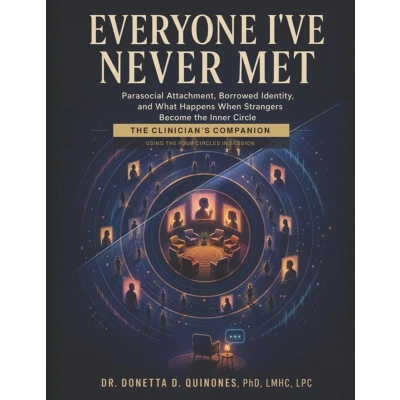
For the Clinician, About Where It Breaks This is not an evidence-based protocol, and it is not necessary. Here is what it is instead.A formulation and a set of conversation structures, with every claim sorted into what the literature supports, what is a reasonable extension, and what is the author's own - stated in the sentence rather than in a footnote.Twelve briefs, one per chapter, each in the same nine parts: the chapter in one page, the clinical idea underneath with its tier named, constructed composites, openers in words you would actually say, the instrument run as a conversation rather than as a form, what comes up, what to assign, and documentation language that is behavioral and not a diagnosis. In every brief, Where It Goes Wrong is longer than the technique. Where It must Not Be Used - Erotomanic delusion - a differential- Stalking or approach - safety first- Autistic special interest - never reframed- Bereavement and continuing bonds- Adolescent identity development- Where the attachment is load-bearing- Differentials, gathered on one-page- The clinician's own circles No score. No type. No verdict. Nothing here screens, measures, or sorts. No scoring key, no out-point, no severity band, and no combination of client responses constitutes a finding. Emotional objectification is not a diagnosis and never appears in a record as one. Every instrument is a conversation structure, and a clinician who converts one into a screener has broken it.
 Prijshistorie
* Prijshistorie bevat geen data van Amazon, Amazon Marketplace.
Prijzen voor het laatst bijgewerkt op:
 Gerelateerde resultaten
 Productspecificaties


