
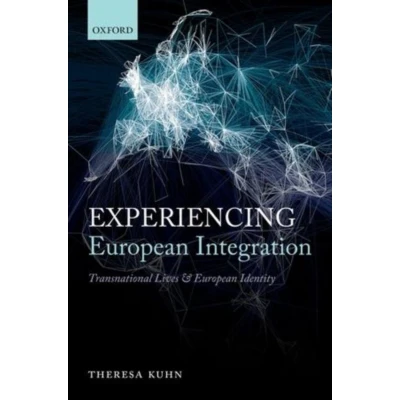
Experiencing European Integration
Uitgelicht

|
125,00
121,00 |
Naar shop
|
| VERGELIJK ALLE AANBIEDERS (1) | ||
 Beschrijving
Bol
This book develops a comprehensive theoretical model to understand how transnational interactions relate to orientations towards European integration. European integration has generated a wide array of economic, political, and social opportunities beyond the nation state. European citizens are free to obtain their academic degree in Germany, earn their money in London, invest it in Luxembourg, and retire to Spain. An early theorist of European integration, Karl Deutsch expected this development to promote a collective identity and public support for European integration: by interacting across borders, Europeans would become aware of their shared values and beliefs, and eventually acquire a common 'we feeling'. Experiencing European Integration puts these expectations under scrutiny by developing a comprehensive theoretical model that helps us understand how transnational interactions relate to orientations towards European integration. An extensive analysis of survey data covering the 27 EU member states provides a thorough empirical test of transactionalist hypotheses. Findings show that individual transnationalism indeed strongly and positively influences EU support, but that only a young, wealthy, and highly educated minority take part in cross-border interactions. The book further shows that the effectiveness of transnational interactions in generating EU support is contingent on a number of factors such as their purpose and scope. Importantly, increased transnational interactions result in negative externalities among those who do not become transnationally active themselves. By discussing the implications of transnationalism for the theoretical debate and current policy, this volume will provide a unique analysis of a key dynamic of European integration.


Vergelijk aanbieders (1)

 Beschrijving
(1)
Beschrijving
(1)
This book develops a comprehensive theoretical model to understand how transnational interactions relate to orientations towards European integration. European integration has generated a wide array of economic, political, and social opportunities beyond the nation state. European citizens are free to obtain their academic degree in Germany, earn their money in London, invest it in Luxembourg, and retire to Spain. An early theorist of European integration, Karl Deutsch expected this development to promote a collective identity and public support for European integration: by interacting across borders, Europeans would become aware of their shared values and beliefs, and eventually acquire a common 'we feeling'. Experiencing European Integration puts these expectations under scrutiny by developing a comprehensive theoretical model that helps us understand how transnational interactions relate to orientations towards European integration. An extensive analysis of survey data covering the 27 EU member states provides a thorough empirical test of transactionalist hypotheses. Findings show that individual transnationalism indeed strongly and positively influences EU support, but that only a young, wealthy, and highly educated minority take part in cross-border interactions. The book further shows that the effectiveness of transnational interactions in generating EU support is contingent on a number of factors such as their purpose and scope. Importantly, increased transnational interactions result in negative externalities among those who do not become transnationally active themselves. By discussing the implications of transnationalism for the theoretical debate and current policy, this volume will provide a unique analysis of a key dynamic of European integration.
 Productspecificaties
| EAN |
|
|---|---|
| Maat |
|
 Prijshistorie
Prijzen voor het laatst bijgewerkt op:
 Gerelateerde resultaten


