


€ 59,99 Gratis verzending

Uitgelicht
|
|
59,99 |
Naar shop
|
| VERGELIJK ALLE AANBIEDERS (1) | ||
 Beschrijving
Vergelijk aanbieders (1)
€ 59,99 Gratis verzending
Winkels met andere maten
Beschrijving
(1)
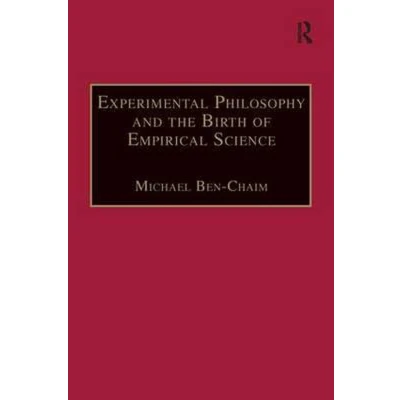
How did empirical research become the cornerstone of modern science? Scholars have traditionally associated empirical research with the search for knowledge, but have failed to provide adequate solutions to this basic historical problem. This book offers a different approach that focuses on human understanding - rather than knowledge - and its cultural expression in the creation and social transaction of causal explanations. Ancient Greek philosophers professed that genuine understanding of a particular subject was gained only when its nature, or essence, was defined. This ancient mode of explanation furnished the core teachings of late medieval natural philosophers, and was reaffirmed by early modern philosophers such as Bacon and Descartes. Yet during the second half of the 17th century, radical transformation gave rise to innovative research practices that were designed to explain how empirical properties of the physical world were correlated. The study unfolded in this book centres on the works of Robert Boyle, John Locke, and Isaac Newton - the most notable exponents of the 'experimental philosophy' in the late 17th century - to explore how this transformation led to the emergence of a recognizably modern culture of empirical research. Relating empirical with explanatory practices, this book offers a novel solution to one of the major problems in the history of western science and philosophy. It thereby provides a new perspective on the Scientific Revolution and the origins of modern empiricism. At the same time, this book demonstrates how historical and sociological tools can be combined to study science as an evolving institution of human understanding.
 Productspecificaties
| EAN |
|
|---|---|
| Maat |
|
 Prijshistorie
 Prijzen voor het laatst bijgewerkt op:
 Gerelateerde resultaten


