


€ 157,00 Gratis verzending

Uitgelicht
|
|
157,00 |
Naar shop
|
| VERGELIJK ALLE AANBIEDERS (1) | ||
 Beschrijving
Vergelijk aanbieders (1)
€ 157,00 Gratis verzending
Winkels met andere maten
Beschrijving
(1)
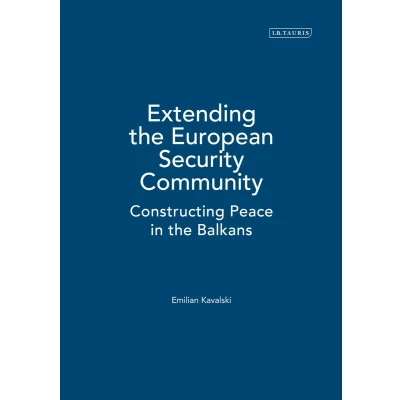
Looking at the order-promoting processes of both the EU and Nato, this work offers a detailed comparative analysis of the role played by external actors in the Balkan region as a whole. In doing so, it provides an insight into the processes of peace-promotion in general, and the patterns of security-community-building in the Balkans in particular. The region of the Balkans has become one of the emblematic features of the post-Cold War geography of international relations. Understanding the extension of the European zone of peace to the Balkans is at the heart of this pioneering work into the post-Cold War socialisation of the region. How is peace (i.e. a security-community-order) initiated in the Balkans? Who are the dominant agents of such peace-promotion? What processes suggest the initiation of (lasting) peace in the Balkans? Under what circumstances do regional states comply with international standards? Looking at the order-promoting processes of both the EU and Nato, Emilian Kavalski offers us the first detailed and theoretically-informed comparative analysis of the role played by external actors in the Balkan region as a whole. In doing so, he provides us with an insight into the processes of peace-promotion in general, and the patterns of security-community-building in the Balkans in particular.
 Productspecificaties
| EAN |
|
|---|---|
| Maat |
|
 Prijshistorie
 Prijzen voor het laatst bijgewerkt op:
 Gerelateerde resultaten


