

€ 11,96 Gratis verzending

Gesponsorde links
|
|
11,96 |
Naar shop
|

|
11,96 |
Naar shop
|

|
13,50 |
Naar shop
|
| VERGELIJK ALLE AANBIEDERS (3) | ||
 Beschrijving
Vergelijk aanbieders (3)
Gesponsorde links · Sommige shops betalen ons een vergoeding
€ 11,96 Gratis verzending
€ 11,96 Gratis verzending
€ 13,50 € 2,99 verzendkosten Totaal € 16,49
Winkels met andere maten
Beschrijving
(1)
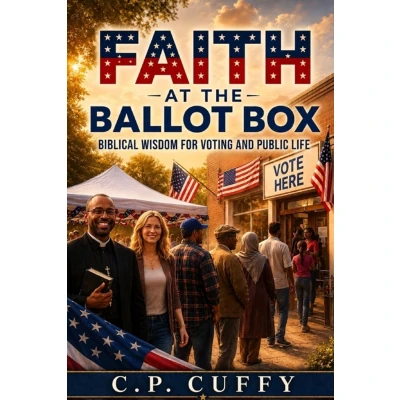
Faith at the Ballot Box presents a Christian framework for thinking about politics, government, leadership, citizenship, and public responsibility. Its central argument is that politics is important because political decisions profoundly affect human beings and communities, but politics is not ultimate. God alone is ultimate.The book begins with the sovereignty of God. Political leaders, governments, nations, parties, and institutions possess real authority, but none possesses absolute authority. Human government operates under God's sovereignty and remains accountable to moral standards beyond itself. This prevents political idolatry the tendency to place ultimate hope, loyalty, or identity in a political party, candidate, movement, or nation.From this foundation, the book turns to the human person. Every person possesses inherent dignity because human beings are created in the image of God. People must therefore never be reduced to voters, taxpayers, economic units, political categories, or social problems. Human dignity requires concern for the vulnerable while also recognizing that people possess responsibility, agency, and obligations toward one another.The book then confronts the reality of sin. Human selfishness, pride, greed, fear, dishonesty, and the desire for control affect not only individuals but also political institutions and movements. Because no person or institution is immune from corruption, political power must be restrained through law, accountability, transparency, and institutional limits. Democracy and majority rule are valuable, but neither should be confused with absolute justice.The discussion of power builds upon this theology of sin and sovereignty. Power can be a gift when it protects people, establishes order, restrains violence, and promotes the common good. Yet power can also become destructive when it is used for domination, personal enrichment, revenge, or the suppression of others. Political authority is therefore best understood as stewardship. Leaders do not own their offices; they temporarily hold authority in trust and are responsible for how they use it.The book's discussion of justice emphasizes that public institutions must give people what is rightly due to them. Justice requires impartiality, protection of the vulnerable, accountability for wrongdoing, and respect for human dignity. Justice cannot simply mean helping one's own political side. It requires citizens to pursue what is right even when doing so is inconvenient or politically costly.
 Prijshistorie
* Prijshistorie bevat geen data van Amazon, Amazon Marketplace.
Prijzen voor het laatst bijgewerkt op:
 Gerelateerde resultaten
 Productspecificaties


