

€ 40,66 Gratis verzending

Uitgelicht
|
|
40,66 |
Naar shop
|

|
40,66 |
Naar shop
|

|
40,66 |
Naar shop
|
| VERGELIJK ALLE AANBIEDERS (3) | ||
 Beschrijving
Vergelijk aanbieders (3)
€ 40,66 Gratis verzending
€ 40,66 Gratis verzending
€ 40,66 Gratis verzending
Winkels met andere maten
Beschrijving
(1)
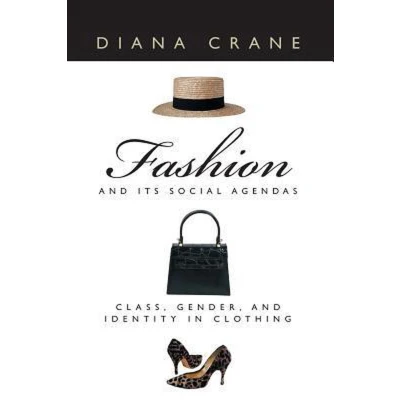
It has long been said that clothes make the man (or woman), but is it still true? If so, how has the information clothes convey changed over the years? Using a wide range of historical and contemporary materials, the author demonstrates how the social significance of clothing has been transformed. It has long been said that clothes make the man (or woman), but is it still true today? If so, how has the information clothes convey changed over the years? Using a wide range of historical and contemporary materials, Diana Crane demonstrates how the social significance of clothing has been transformed. Crane compares 19th-century societies - France and the United States - where social class was the most salient aspect of social identity signified in clothing with late 20th-century America, where lifestyle, gender, sexual orientation, age and ethnicity are more meaningful to individuals in constructing their wardrobes. Today, clothes worn at work signify social class, but leisure clothes convey meanings ranging from trite to political. In today's multicode societies, clothes inhibit as well as facilitate communication between highly fragmented social groups. Crane extends her comparison by showing how 19th-century French designers created fashions that suited lifestyles of Paris elites but that were also widely adopted outside France. By contrast, today's designers operate in a global marketplace, shaped by television, film and popular music. No longer confined to elites, trendsetters are drawn from many social groups, and most trends have short trajectories. To assess the impact of fashion on women, Crane uses voices of college-aged and middle-aged women who took part in focus groups. These discussions yield fascinating information about women's perceptions of female identity and "Fashion and Its Social Agendas" stands out as a critical study of gender, fashion and consumer culture.
 Prijshistorie
 * Prijshistorie bevat geen data van Amazon, Amazon Marketplace.
Prijzen voor het laatst bijgewerkt op:
 Gerelateerde resultaten
 Productspecificaties


