
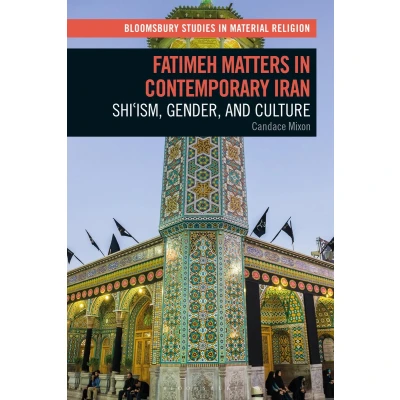
Fatimeh Matters in Contemporary Iran: Shi'ism, Gender, and Culture
Uitgelicht

|
99,45 |
Naar shop
|

|
105,50 |
Naar shop
|

|
105,50 |
Naar shop
|
| VERGELIJK ALLE AANBIEDERS (3) | ||
 Beschrijving
Bol
Shows that Fatimeh, daughter of Muhammad, is central to Iran’s cultural, religious, and political fabric by tracing her presence in ceremonies, sermons, places, and everyday items. This book shows that Fatimeh, daughter of Muhammad, is central to Iran’s cultural, religious, and political fabric by tracing the ceremonies, sermons, places, and everyday items used and produced to honor her in the country today. Historically often treated as a woman of little significance, Fatimeh has become a key figure in the project of state building after the Iranian Revolution as the Iranian state, clerics, artists, and others have reimagined the importance of the mother of the Twelver Shi’i Imamate. In this study grounded in research conducted in Iran, Candace Mixon walks us through a wealth of material objects that reveal Fatimeh’s crucial role in the culture, politics, and religious ideology of contemporary Iran. She traces Fatimeh’s presence in objects and places as varied as pamphlets, sacred manuscripts, the holy shrine cities of Mashhad and Qom, and the tile factory of the Astan-e Quds-e Razavi Foundation – a site where religious material culture is literally manufactured. Mixon draws on theories from the fields of material culture studies, religious studies, Islamic studies, and gender studies to consider how these objects, ephemeral and sacred alike, can enrich our understanding of Iran’s political and religious history. By reconsidering established historical narratives in light of her analysis, she shows that, in today’s Iran, Fatimeh matters more than ever.


 Beschrijving
(2)
Beschrijving
(2)
Shows that Fatimeh, daughter of Muhammad, is central to Iran’s cultural, religious, and political fabric by tracing her presence in ceremonies, sermons, places, and everyday items. This book shows that Fatimeh, daughter of Muhammad, is central to Iran’s cultural, religious, and political fabric by tracing the ceremonies, sermons, places, and everyday items used and produced to honor her in the country today. Historically often treated as a woman of little significance, Fatimeh has become a key figure in the project of state building after the Iranian Revolution as the Iranian state, clerics, artists, and others have reimagined the importance of the mother of the Twelver Shi’i Imamate. In this study grounded in research conducted in Iran, Candace Mixon walks us through a wealth of material objects that reveal Fatimeh’s crucial role in the culture, politics, and religious ideology of contemporary Iran. She traces Fatimeh’s presence in objects and places as varied as pamphlets, sacred manuscripts, the holy shrine cities of Mashhad and Qom, and the tile factory of the Astan-e Quds-e Razavi Foundation – a site where religious material culture is literally manufactured. Mixon draws on theories from the fields of material culture studies, religious studies, Islamic studies, and gender studies to consider how these objects, ephemeral and sacred alike, can enrich our understanding of Iran’s political and religious history. By reconsidering established historical narratives in light of her analysis, she shows that, in today’s Iran, Fatimeh matters more than ever.
AmazonPagina's: 240, Hardcover, Bloomsbury Academic
 Productspecificaties
 Prijshistorie
* Prijshistorie bevat geen data van Amazon, Amazon Marketplace.
Prijzen voor het laatst bijgewerkt op:
 Gerelateerde resultaten


