

gebruikt € 22,39 Gratis verzending

Uitgelicht
|
|
22,39 |
Naar shop
|

|
178,50 |
Naar shop
|
| VERGELIJK ALLE AANBIEDERS (2) | ||
 Beschrijving
Vergelijk aanbieders (2)
gebruikt € 22,39 Gratis verzending
€ 178,50 Gratis verzending
Winkels met andere maten
Beschrijving
(2)
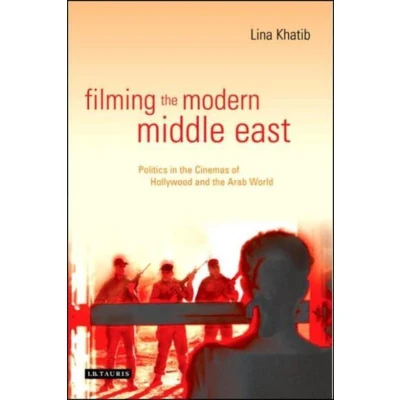
Today the world's media have a pressing need to understand and interpret the modern Middle East. In this timely book, Lina Khatib examines how contemporary American cinema and the cinemas of the Arab world contribute to this global preoccupation in their representations of Middle Eastern politics. This examination of Hollywood as the dominant Western interpreter of the Arab World also views the Arab world in terms of how it perceives itself and others through its films. It covers films made in the USA, Egypt, Tunisia, Algeria, Morocco, Lebanon, Syria and Palestine over the final two decades of the last century and into the present, showing how these cinemas represent major political issues in the Middle East, from the Arab-Israeli conflict, through the Gulf War, to Islamic fundamentalism. It also uncovers the challenges presented by Arab cinemas to Hollywood's ways of representing Middle East politics. The book goes beyond an analysis of difference, to address similarities in how political themes are selected as well as in the cinematic language that gives them life. For example, it looks at cinema as a tool of nationalism in the USA and the Arab world and at how the representations of political issues by Hollywood and Arab cinemas are informed by the political and historical contexts in which they occur. This book is inspired by Edward Said's writing on Orientalism, but it goes further, to show not only how the 'Orient' is constructed by the 'Occident', but also how the 'Orient' itself is consumed by power struggles both internal and external. Filming The Modern Middle East therefore establishes an important link between discourses of the West and those of the East.
Bol PartnerPresents an investigation of how modern American cinema and the cinemas of the Arab world represent Middle Eastern politics to their audiences. This book examines the cinematic depictions of political issues, from the Arab-Israeli conflict to the Gulf War, to Islamic fundamentalism, and covers films made in the USA, in Egypt, Tunisia, and others. 'Filming the Modern Middle East' is the first comparative investigation of how modern American cinema and the cinemas of the Arab world represent Middle Eastern politics to their audiences. Lina Khatib examines the cinematic depictions of major political issues, from the Arab-Israeli conflict to the Gulf War, to Islamic fundamentalism, and covers films made in the USA, in Egypt, Tunisia, Morocco, Lebanon, Syria and Palestine. She explores cinema's role as a tool of nationalism in the USA and the Arab world, and the challenges the Arab cinemas present to Hollywood's dominant representations of Middle Eastern politics. But, she also reveals similarities between supposed contradictory cinemas and - importantly - not only how the 'Orient' is constructed by the 'Occident', but also how the 'Orient' itself in these cinemas represents Self and Others and how it is consumed by internal as well as external struggles. This is a fascinating, original contribution to the burgeoning interest in world cinemas, which also offers a fresh way of seeing Middle East politics through cinematic lenses.
 Productspecificaties
| EAN |
|
|---|---|
| Maat |
|
 Prijshistorie
Prijzen voor het laatst bijgewerkt op:
 Gerelateerde resultaten


