


€ 88,99 Gratis verzending

Gesponsorde links
|
|
88,99 |
Naar shop
|

|
92,29 |
Naar shop
|

|
92,29 |
Naar shop
|
| VERGELIJK ALLE AANBIEDERS (3) | ||
 Beschrijving
Vergelijk aanbieders (3)
Gesponsorde links · Sommige shops betalen ons een vergoeding
€ 88,99 Gratis verzending
€ 92,29 Gratis verzending
€ 92,29 Gratis verzending
Winkels met andere maten
Beschrijving
(1)
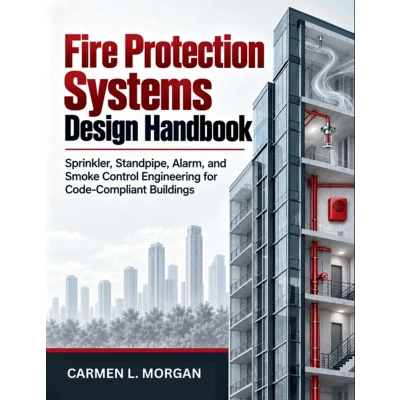
The criterion is written down. The reasoning behind it is not. Anyone can look up a design density, a maximum spacing, or a minimum outlet pressure. Far fewer can explain where it came from, what physical behaviour it stands in for, and what happens when the conditions it quietly assumes no longer hold. The gap shows up in predictable places: a hydraulic calculation that balances but cannot be defended, an obstruction rule applied from memory instead of geometry, a pump that meets its duty point on paper and disappoints at the test header, a plan review comment nobody can answer because no one recorded what governed. >Working through it, you will be able to: - Reduce hydrant flow test data to a supply curve and plot a system demand against it.- Calculate tree, looped, and gridded systems node by node, with equivalent lengths for fittings and a discharge coefficient per head.- Choose a system type from hazard and consequence, then identify and calculate the area that actually governs.- Apply spacing, deflector position, and obstruction rules to real ceilings, including beams, joists, slopes, and concealed spaces.- Match a pump to a demand curve using its three characteristic points and check suction for cavitation.- Space detectors with the corrections that apply, size notification circuits for voltage drop, and calculate secondary power.- Size stairwell pressurisation and atrium exhaust against a stated tenability objective, and compute agent quantity, correction factors, and enclosure hold time. Coverage runs from fire behaviour and design fires through codes and listings; water supply and underground mains; hydraulic method and sprinkler calculation; wet, dry, preaction, and deluge systems; layout and obstruction design; storage and residential protection; pumps and controllers; standpipe systems; detection and alarm; clean agent, foam, water mist, and cooking protection; smoke management; egress and system integration; and submittals, plan review, commissioning, and impairment management. Notation is fixed throughout and collected in appendices with unit conversions and hydraulic data. >Open it and start producing designs you can derive, check, and defend, from first hazard assumption to handover document.
 Prijshistorie
* Prijshistorie bevat geen data van Amazon, Amazon Marketplace.
Prijzen voor het laatst bijgewerkt op:
 Gerelateerde resultaten
 Productspecificaties


