
Fixing Language
Uitgelicht

|
65,99 |
Naar shop
|
| VERGELIJK ALLE AANBIEDERS (1) | ||
 Beschrijving
Bol
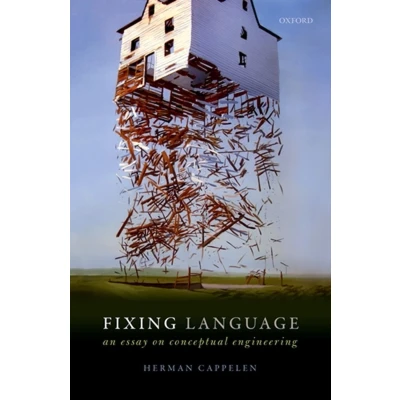
Herman Cappelen investigates how language and other representational devices can go wrong, and how to fix them. We use language to understand and talk about the world, but what if our language has deficiencies that prevent it from playing that role? How can we revise our concepts, and what are the limits on revision? Herman Cappelen investigates ways in which language (and other representational devices) can be defective, and how they can be improved. In all parts of philosophy there are philosophers who criticize the concepts we have and propose ways to improve them. Once one notices this about philosophy, it's easy to see that revisionist projects occur in a range of other intellectual disciplines and in ordinary life. That fact gives rise to a cluster of questions: How does the process of conceptual amelioration work? What are the limits of revision? (How much revision is too much?) How does the process of revision fit into an overall theory of language and communication? Fixing Language aims to answer those questions. In so doing, it aims also to draw attention to a tradition in 20th- and 21st-century philosophy that isn't sufficiently recognized. There's a straight intellectual line from Frege and Carnap to a cluster of contemporary work that isn't typically seen as closely related: much work on gender and race, revisionism about truth, revisionism about moral language, and revisionism in metaphysics and philosophy of mind. These views all have common core commitments: revision is both possible and important. They also face common challenges about the methods, assumptions, and limits of revision.


Vergelijk aanbieders (1)

 Beschrijving
(1)
Beschrijving
(1)
Herman Cappelen investigates how language and other representational devices can go wrong, and how to fix them. We use language to understand and talk about the world, but what if our language has deficiencies that prevent it from playing that role? How can we revise our concepts, and what are the limits on revision? Herman Cappelen investigates ways in which language (and other representational devices) can be defective, and how they can be improved. In all parts of philosophy there are philosophers who criticize the concepts we have and propose ways to improve them. Once one notices this about philosophy, it's easy to see that revisionist projects occur in a range of other intellectual disciplines and in ordinary life. That fact gives rise to a cluster of questions: How does the process of conceptual amelioration work? What are the limits of revision? (How much revision is too much?) How does the process of revision fit into an overall theory of language and communication? Fixing Language aims to answer those questions. In so doing, it aims also to draw attention to a tradition in 20th- and 21st-century philosophy that isn't sufficiently recognized. There's a straight intellectual line from Frege and Carnap to a cluster of contemporary work that isn't typically seen as closely related: much work on gender and race, revisionism about truth, revisionism about moral language, and revisionism in metaphysics and philosophy of mind. These views all have common core commitments: revision is both possible and important. They also face common challenges about the methods, assumptions, and limits of revision.
 Productspecificaties
| EAN |
|
|---|---|
| Maat |
|
 Prijshistorie
Prijzen voor het laatst bijgewerkt op:
 Gerelateerde resultaten


