


€ 225,00 Gratis verzending

Gesponsorde links
|
|
225,00 |
Naar shop
|

|
235,29 |
Naar shop
|
| VERGELIJK ALLE AANBIEDERS (2) | ||
 Beschrijving
Vergelijk aanbieders (2)
Gesponsorde links · Sommige shops betalen ons een vergoeding
€ 225,00 Gratis verzending
€ 235,29 Gratis verzending
Winkels met andere maten
Beschrijving
(1)
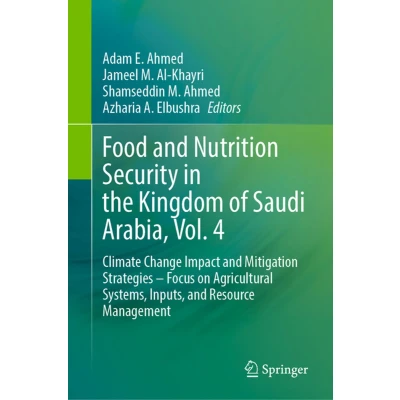
Synthesizing vulnerability assessments with mitigation and adaptation strategies, the volume offers a data-driven roadmap for building climate-resilient agricultural systems aligned with Saudi Vision 2030. The volume's key takeaways include that water remains the core constraint, requiring crop prioritization and strategic desalination. Climate change acts as a threat multiplier for Saudi Arabia, a nation already defined by extreme aridity, water scarcity, limited arable land, and heavy dependence on food imports. This volume, comprising 24 chapters from 73 distinguished scientists, offers the most detailed national assessment of climate impacts on water resources, soils, crops, and agricultural inputs. The volume documents widespread land degradation, the accelerating effects of warming on evaporative demand, and the urgent need for integrated water-energy-food governance. Groundwater depletion, rising temperatures, and volatile global markets compound existing vulnerabilities. Key solutions evaluated include organic farming, hydroponics, AI-driven technologies, precision agriculture, renewable energy-powered desalination, treated wastewater reuse, genetic resource conservation, and micronutrient efficiency. The book volume further explores climate effects on food nutrition, safety, and microbial risks, alongside socio-economic dimensions such as fast food culture, agritourism, and GCC-level GFSI performance on food safety and sustainability. Synthesizing vulnerability assessments with mitigation and adaptation strategies, the volume offers a data-driven roadmap for building climate-resilient agricultural systems aligned with Saudi Vision 2030. The volume's key takeaways include that water remains the core constraint, requiring crop prioritization and strategic desalination. Land degradation makes soil restoration essential. Technology pathways can reduce water and input use while stabilizing yields. Higher temperatures increase pathogen risks, making cold chain upgrades urgent. Integrated governance enables effective adaptation investments. The volume's call to action is to scale climate-smart technologies and resource governance reforms now, phase out subsidies for water-intensive crops, scale investment in non-conventional water sources, strengthen early warning systems, and adopt water-efficient technologies. This volume is essential reading for policymakers, researchers, agribusiness professionals, and students committed to building a climate-resilient, sustainable, and food-secure future for Saudi Arabia and beyond.
 Prijshistorie
* Prijshistorie bevat geen data van Amazon.
Prijzen voor het laatst bijgewerkt op:
 Gerelateerde resultaten
 Productspecificaties


