
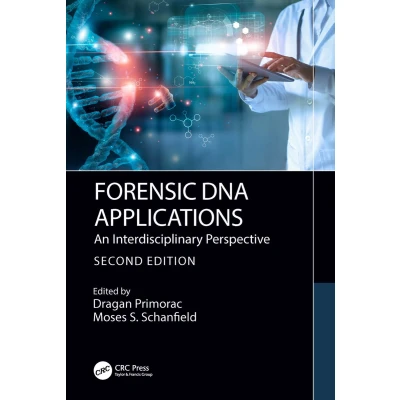
Forensic DNA Applications: An Interdisciplinary Perspective
Uitgelicht

|
28,49 |
Naar shop
|

|
84,99 |
Naar shop
|
| VERGELIJK ALLE AANBIEDERS (2) | ||
 Beschrijving
Bol Partner
Forensic DNA Applications: An Interdisciplinary Perspective was developed as an outgrowth of a conference held by the International Society of Applied Biological Sciences. The topic was human genome-based applications in forensic science, anthropology, and individualized medicine. Assembling the contributions of contributors from numerous regions around the world, this volume is designed as both a textbook for forensic molecular biology students and a reference for practitioners and those in the legal system. The book begins with the history and development of DNA typing and profiling for criminal and civil purposes. It discusses the statistical interpretation of results with case examples, mitochondrial DNA testing, Y single nucleotide polymorphisms (SNPs) and short tandem repeats (STRs), and X SNP and STR testing. It also explores low copy number DNA typing, mixtures, and quality assurance and control. The second section examines the collection and preservation of biological evidence under a variety of different circumstances and the identification of human remains-including in mass disaster settings. It discusses applications to bioterrorism investigations, animal DNA testing in criminal cases, pedigree questions and wildlife forensic problems, applications in forensic entomology, and forensic botany. The third section explores recent developments and new technologies, including the rigorous identification of tissue of origin, mtDNA profiling using immobilized probe strips, chips and next-generation sequencing, the use of SNPs to ascertain phenotypic characteristics, and the molecular autopsy that looks at aspects of toxicogenetics and pharmacogenetics. The book concludes with a discussion on law, ethics, and policy. It examines the use of DNA evidence in the criminal justice system in both the United States and Europe, ethical issues in forensic laboratory practices, familial searches, DNA databases, ancestry searches, physical phenotyping, and report writing. The contributors also examine DNA applications in immigration and human trafficking cases and international perspectives on DNA databases.


 Beschrijving
(2)
Beschrijving
(2)
Forensic DNA Applications: An Interdisciplinary Perspective was developed as an outgrowth of a conference held by the International Society of Applied Biological Sciences. The topic was human genome-based applications in forensic science, anthropology, and individualized medicine. Assembling the contributions of contributors from numerous regions around the world, this volume is designed as both a textbook for forensic molecular biology students and a reference for practitioners and those in the legal system. The book begins with the history and development of DNA typing and profiling for criminal and civil purposes. It discusses the statistical interpretation of results with case examples, mitochondrial DNA testing, Y single nucleotide polymorphisms (SNPs) and short tandem repeats (STRs), and X SNP and STR testing. It also explores low copy number DNA typing, mixtures, and quality assurance and control. The second section examines the collection and preservation of biological evidence under a variety of different circumstances and the identification of human remains-including in mass disaster settings. It discusses applications to bioterrorism investigations, animal DNA testing in criminal cases, pedigree questions and wildlife forensic problems, applications in forensic entomology, and forensic botany. The third section explores recent developments and new technologies, including the rigorous identification of tissue of origin, mtDNA profiling using immobilized probe strips, chips and next-generation sequencing, the use of SNPs to ascertain phenotypic characteristics, and the molecular autopsy that looks at aspects of toxicogenetics and pharmacogenetics. The book concludes with a discussion on law, ethics, and policy. It examines the use of DNA evidence in the criminal justice system in both the United States and Europe, ethical issues in forensic laboratory practices, familial searches, DNA databases, ancestry searches, physical phenotyping, and report writing. The contributors also examine DNA applications in immigration and human trafficking cases and international perspectives on DNA databases.
BolForensic DNA Applications: An Interdisciplinary Perspective, Second Edition is fully updated to outline the latest advances in forensic DNA testing techniques and applications. It continues to fill the need for a reference book for people working in the field of forensic molecular biology testing and research as well as individuals investigating and adjudicating cases involving DNA evidence, whether they be civil or criminal cases. DNA techniques have greatly impacted obvious traditional forensic areas, but such advances have also positively affected myriad new areas of research and inquiry. It is possible today to think about solving forensic problems that were simply unheard of even a few years ago. As such, the book pulls all relevant research and applied science together into a detailed and comprehensive collection. Part I begins with the history and development of DNA typing and profiling for criminal and civil purposes. It discusses the statistical interpretation of results with case examples, mitochondrial DNA testing, Y single nucleotide polymorphisms (SNPs) and short tandem repeats (STRs), and X SNP and STR testing. It also explores low copy number DNA typing, mixtures, and quality assurance and control. Part II moves on to cover the various uses and applications of analyzing collected physical evidence, victim identification in mass disasters, analyzing animal DNA, forensic botany, and other unique applications. Part III is dedicated to the latest advances and developments in human molecular biology and Part IV looks at policies and laws and ethics governing DNA evidence, and its utilization in various cases and the courts. Forensic DNA Applications, Second Edition covers cutting-edge research and advancements in the field and is the most up-to-date reference available. Edited and contributed to by the world's foremost leaders in the field, it is a must-have reference for established professionals, and an essential resource to legal professionals—lawyers and judges dealing with civil and criminal cases involving DNA technology—as well as students entering the fields of genetics and forensic DNA analysis.
 Productspecificaties
| EAN |
|
|---|---|
| Maat |
|
 Prijshistorie
Prijzen voor het laatst bijgewerkt op:
 Gerelateerde resultaten


