
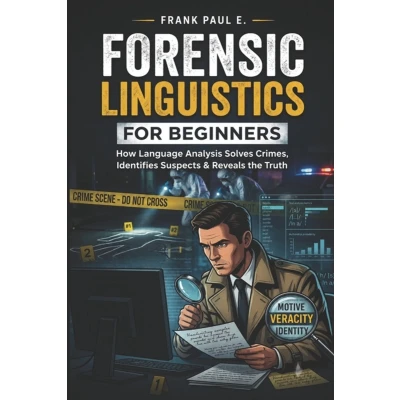
Forensic Linguistics for Beginners: How Criminals Leave Fingerprints in Their Words — A Practical Guide to Authorship, Anonymous Messages, Deepfakes, and the Real Cases That Cracked Them: 20
Uitgelicht

|
9,28 |
Naar shop
|

|
9,28 |
Naar shop
|

|
10,50 |
Naar shop
|
| VERGELIJK ALLE AANBIEDERS (3) | ||
 Beschrijving
Bol
Can you tell who wrote an anonymous message - without ever seeing the name?Every threat, every ransom note, every fake review, every anonymous email is signed. Not with a name - with a fingerprint made of words: the habits, punctuation, and rhythms we all leave behind without noticing. Forensic linguists have learned to read that signature. In this book, so will you.Written for absolute beginners - no background in law, linguistics, or criminology required - Forensic Linguistics for Beginners turns a fascinating science into a practical, case-driven guide you can actually use. From the founding cases to TikTok and Telegram, from recorded voices to AI-generated text and deepfakes, you'll learn how language becomes evidence - and how real investigators weigh it honestly.Inside every chapter: - A real-feeling Case Study that shows the method in action- A Try It Yourself exercise so you learn by doing, not just reading- An Expert Tip drawn from how professionals actually think- A Common Mistake so you dodge the traps beginners fall into- An AI Corner on how machines both threaten and serve the field- A sharp Field Note you'll rememberYou'll discover how to: - Spot the hidden habits that give any writer away- Compare two accounts and tell if one person is behind both- Read a threat for its real purpose, not just its fear- Analyze messages from social media, chats, and recordings- Understand why no tool reliably detects AI-written text - and what does workPlus a chapter of four real, documented cases - Derek Bentley, the Unabomber, Danielle Jones, and Jenny Nicholl - where the analysis of words helped decide a verdict, and a bonus chapter on the century-old "cut-up" trick behind the classic ransom note.If you love true crime, criminology, forensic science, or the hidden power of language, this is your way in.Start reading. Find out who wrote it.


 Beschrijving
(1)
Beschrijving
(1)
Can you tell who wrote an anonymous message - without ever seeing the name?Every threat, every ransom note, every fake review, every anonymous email is signed. Not with a name - with a fingerprint made of words: the habits, punctuation, and rhythms we all leave behind without noticing. Forensic linguists have learned to read that signature. In this book, so will you.Written for absolute beginners - no background in law, linguistics, or criminology required - Forensic Linguistics for Beginners turns a fascinating science into a practical, case-driven guide you can actually use. From the founding cases to TikTok and Telegram, from recorded voices to AI-generated text and deepfakes, you'll learn how language becomes evidence - and how real investigators weigh it honestly.Inside every chapter: - A real-feeling Case Study that shows the method in action- A Try It Yourself exercise so you learn by doing, not just reading- An Expert Tip drawn from how professionals actually think- A Common Mistake so you dodge the traps beginners fall into- An AI Corner on how machines both threaten and serve the field- A sharp Field Note you'll rememberYou'll discover how to: - Spot the hidden habits that give any writer away- Compare two accounts and tell if one person is behind both- Read a threat for its real purpose, not just its fear- Analyze messages from social media, chats, and recordings- Understand why no tool reliably detects AI-written text - and what does workPlus a chapter of four real, documented cases - Derek Bentley, the Unabomber, Danielle Jones, and Jenny Nicholl - where the analysis of words helped decide a verdict, and a bonus chapter on the century-old "cut-up" trick behind the classic ransom note.If you love true crime, criminology, forensic science, or the hidden power of language, this is your way in.Start reading. Find out who wrote it.
 Productspecificaties
 Prijshistorie
* Prijshistorie bevat geen data van Amazon, Amazon Marketplace.
Prijzen voor het laatst bijgewerkt op:
 Gerelateerde resultaten


