


€ 73,99 Gratis verzending

Gesponsorde links
|
|
73,99 |
Naar shop
|

|
83,95 |
Naar shop
|

|
83,95 |
Naar shop
|
| VERGELIJK ALLE AANBIEDERS (3) | ||
 Beschrijving
Vergelijk aanbieders (3)
Gesponsorde links · Sommige shops betalen ons een vergoeding
€ 73,99 Gratis verzending
€ 83,95 Gratis verzending
€ 83,95 Gratis verzending
Winkels met andere maten
Beschrijving
(1)
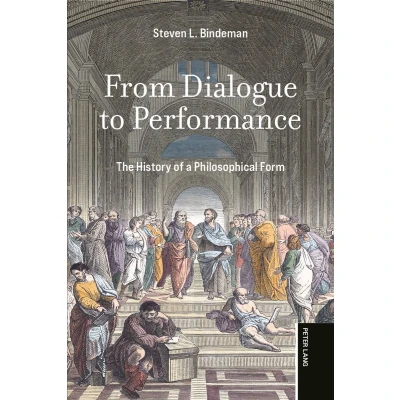
In this book, Steven L. Bindeman traces the evolution of the dialogue form throughout the history of philosophy. “All the world’s a stage,” Shakespeare tells us, “and all the men and women merely players.” But what does this mean, philosophically? Are all actors “merely” players, or do the best of them undergo a transformation in becoming something other than who they are? Are our own identities similarly slippery? Who is the real author of the play in which we find ourselves? To what degree does the very language we use control our thoughts and speech? This book addresses these questions across strikingly different scenarios: ancient Greece, sixteenth-century Italy, and nineteenth- and twentieth-century France and Germany. In each case the contrast between linear and non-linear styles of reasoning is seen to be a major source of conflict, from the contentious exchanges in sixteenth-century Europe between the Church and the supporters of modern science, to the nineteenth-century shift in scholarship from straightforward analysis to hermeneutical interpretation, and to the crisis in twentieth-century thought forced by the need to think and feel as an embodied self beyond language. This work should find its target audience in advanced undergraduate and graduate philosophy students, and in an educated audience outside of academia.
 Prijshistorie
* Prijshistorie bevat geen data van Amazon, Amazon Marketplace.
Prijzen voor het laatst bijgewerkt op:
 Gerelateerde resultaten
 Productspecificaties


