
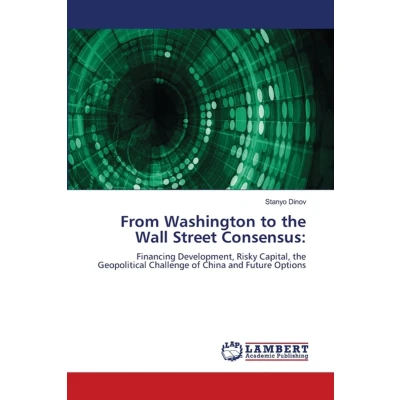
From Washington to the Wall Street Consensus:: Financing Development, Risky Capital, Geopolitical Challenge of China and Future Options
Uitgelicht

|
38,99 |
Naar shop
|

|
43,99 |
Naar shop
|
| VERGELIJK ALLE AANBIEDERS (2) | ||
 Beschrijving
Bol
This book explores the financialisation of global development and its evolution from the market-oriented Washington Consensus, through the Post-Washington Consensus, to the state-capitalist Wall Street Consensus (WSC), and its potential future trajectories. A central role in this process has been played by Multilateral Development Banks, which have shifted from promoting industrial development in less-developed regions to mobilising international private capital backed by public guarantees. The study hypothesises that the WSC-based financialisation paradigm is self-limiting. Its structural downsides include transferring risk to the public sector, widening social disparities, weakening climate standards, and a short-term orientation. It is linked to broader challenges such as constrained economic growth, profit shifting, tax avoidance, dependency, and renewed forms of economic colonialism. As the World Bank shifts from "Billions to Trillions," the book investigates whether WSC changes are driven by its initiators or by shifting geopolitical rivalries. It examines China's state-led "debt-for-growth" development finance, its limitations, and its differences with the Western model.


 Beschrijving
(1)
Beschrijving
(1)
This book explores the financialisation of global development and its evolution from the market-oriented Washington Consensus, through the Post-Washington Consensus, to the state-capitalist Wall Street Consensus (WSC), and its potential future trajectories. A central role in this process has been played by Multilateral Development Banks, which have shifted from promoting industrial development in less-developed regions to mobilising international private capital backed by public guarantees. The study hypothesises that the WSC-based financialisation paradigm is self-limiting. Its structural downsides include transferring risk to the public sector, widening social disparities, weakening climate standards, and a short-term orientation. It is linked to broader challenges such as constrained economic growth, profit shifting, tax avoidance, dependency, and renewed forms of economic colonialism. As the World Bank shifts from "Billions to Trillions," the book investigates whether WSC changes are driven by its initiators or by shifting geopolitical rivalries. It examines China's state-led "debt-for-growth" development finance, its limitations, and its differences with the Western model.
 Productspecificaties
 Prijshistorie
* Prijshistorie bevat geen data van Amazon.
Prijzen voor het laatst bijgewerkt op:
 Gerelateerde resultaten


