

€ 95,18 Gratis verzending

Uitgelicht
|
|
95,18 |
Naar shop
|

|
111,99 |
Naar shop
|
| VERGELIJK ALLE AANBIEDERS (2) | ||
 Beschrijving
Vergelijk aanbieders (2)
€ 95,18 Gratis verzending
€ 111,99 Gratis verzending
Winkels met andere maten
Beschrijving
(1)
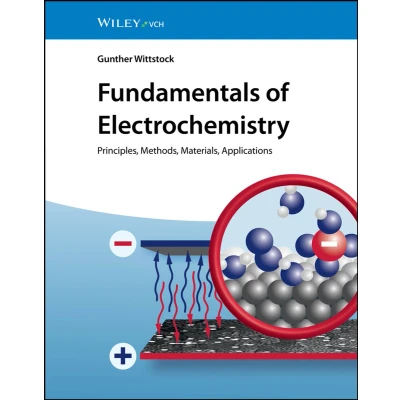
Comprehensive introduction to the field of electrochemistry, covering the fundamentals, key experimental approaches for many current applications, and real-life examples Fundamentals of Electrochemistry provides a profound introduction to the principles of the field in connection to key experimental approaches in the laboratory. This is complemented by a systematic coverage of the most important applications, illustrated by real-life examples presenting electrochemistry as a cross-sectional discipline. Part I of the book presents the fundamentals focusing on key concepts at an introductory BSc level. The parts II-IV on methods, materials, and applications address advanced students from BSc research projects to PhD students. Written by a highly qualified and prominent professor with extensive teaching and research experience in the field, Fundamentals of Electrochemistry explores topics including: Basics concepts of electrochemical cells, electrodes and electrolytes, energetics and kinetics of electrochemical reactions, and their coupling to transport processes Elucidation and application of mechanisms in electron transfer and ion transfer reactions Structure of the solid-electrolyte interfaces and its modification combined with the advanced characterization methods such as vibrational spectroscopy at surfaces, ellipsometry, surface plasmon resonance, spectroscopy of core shell electrons, X-ray diffraction, mass spectrometry, quartz crystal microbalance, and scanning probe techniques Electrodeposition by galvanic processes, underpotential deposition and electrodeposition of oxides, self-assembled monolayers, conducting polymers and organic-inorganic hybrid materials, solid electrolytes and semiconductors, corrosion Electroanalytical methods, electrochemical sensors and biosensors based on potentiometry, amperometry and a large variety of voltammetric methods; micro- and nanoelectrodes Energy conversion in batteries, fuel cells, electrolyzers, and electrochemical capacitors; electrosynthesis The clear and modular structure supplemented by 800+ figures and worked-out examples, supporting different course concepts, makes Fundamentals of Electrochemistry the perfect companion for BSc, MSc, and PhD students in the fields of electrochemistry and related subjects. Comprehensive introduction to the field of electrochemistry, covering the fundamentals, key experimental approaches for many current applications, and real-life examples Fundamentals of Electrochemistry provides a profound introduction to the principles of the field in connection to key experimental approaches in the laboratory. This is complemented by a systematic coverage of the most important applications, illustrated by real-life examples presenting electrochemistry as a cross-sectional discipline. Part I of the book presents the fundamentals focusing on key concepts at an introductory BSc level. The parts II-IV on methods, materials, and applications address advanced students from BSc research projects to PhD students. Written by a highly qualified and prominent professor with extensive teaching and research experience in the field, Fundamentals of Electrochemistry explores topics including: Basics concepts of electrochemical cells, electrodes and electrolytes, energetics and kinetics of electrochemical reactions, and their coupling to transport processes Elucidation and application of mechanisms in electron transfer and ion transfer reactions Structure of the solid-electrolyte interfaces and its modification combined with the advanced characterization methods such as vibrational spectroscopy at surfaces, ellipsometry, surface plasmon resonance, spectroscopy of core shell electrons, X-ray diffraction, mass spectrometry, quartz crystal microbalance, and scanning probe techniques Electrodeposition by galvanic processes, underpotential deposition and electrodeposition of oxides, self-assembled monolayers, conducting polymers and organic-inorganic hybrid materials, solid electrolytes and semiconductors, corrosion Electroanalytical methods, electrochemical sensors and biosensors based on potentiometry, amperometry and a large variety of voltammetric methods; micro- and nanoelectrodes Energy conversion in batteries, fuel cells, electrolyzers, and electrochemical capacitors; electrosynthesis The clear and modular structure supplemented by 800+ figures and worked-out examples, supporting different course concepts, makes Fundamentals of Electrochemistry the perfect companion for BSc, MSc, and PhD students in the fields of electrochemistry and related subjects.
 Prijshistorie
 * Prijshistorie bevat geen data van Amazon.
Prijzen voor het laatst bijgewerkt op:
 Gerelateerde resultaten
 Productspecificaties


