


€ 105,00 Gratis verzending

Gesponsorde links
|
|
105,00 |
Naar shop
|

|
108,64 |
Naar shop
|

|
108,64 |
Naar shop
|
| VERGELIJK ALLE AANBIEDERS (3) | ||
 Beschrijving
Vergelijk aanbieders (3)
Gesponsorde links · Sommige shops betalen ons een vergoeding
€ 105,00 Gratis verzending
€ 108,64 Gratis verzending
€ 108,64 Gratis verzending
Winkels met andere maten
Beschrijving
(1)
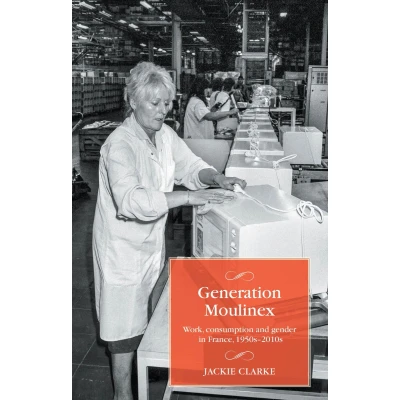
A social and cultural history of Moulinex that analyses mass production, consumption and deindustrialisation through the experiences of French workers, many of them women, from the postwar boom to globalisation. This book charts the history of an iconic French company and those who worked for it. Clarke’s study sheds new light on cultures of work and consumption in postwar France and on workers’ experiences of the restructuring of capitalism since the 1980s. A brand that brought domestic appliances to millions of homes for the first time, Moulinex also played a significant role in the industrialisation of rural France between the mid-1950s and the mid-1970s. Its Normandy factories were marked by a starkly gendered division of labour, with women making up the majority of the workforce. Many workers who joined Moulinex in the 1960s or early 1970s would lose their jobs when factories closed and the company went bust at the turn of the twenty-first century.Drawing on company archives and oral histories, Generation Moulinex examines the role of Moulinex workers as both producers and consumers of domestic appliances. It shows how these workers of the age of affluence consistently confounded the class and gender expectations of their contemporaries, forging new forms of collective identity and action, not just during their working lives but after their factories closed. By taking a single company as its focus, Generation Moulinex captures the implications of large-scale historical processes at the level of everyday life: in the workplace, in consumer practices, in the formation of working-class subjectivities. Moulinex is widely known as a brand that brought domestic appliances into many homes during the 1950s and 1960s. Its history also illuminates broader changes in working-class lives and the organisation of work in postwar France. Based in Normandy, the company was central to the transformation of a rural region, creating a network of factories that employed thousands of workers. Most of these sites have since closed, as industrial employment in France declined sharply from its 1970s peak. Generation Moulinex traces this trajectory from the rise of mass production and consumption to the era of globalisation and deindustrialisation. It centres the experiences of a generation of French workers, many of them women, whose lives both shaped and were shaped by these transformations.
 Prijshistorie
* Prijshistorie bevat geen data van Amazon, Amazon Marketplace.
Prijzen voor het laatst bijgewerkt op:
 Gerelateerde resultaten
 Productspecificaties


