

€ 74,15 Gratis verzending

Gesponsorde links
|
|
74,15 |
Naar shop
|

|
74,15 |
Naar shop
|

|
75,90 |
Naar shop
|
| VERGELIJK ALLE AANBIEDERS (3) | ||
 Beschrijving
Vergelijk aanbieders (3)
Gesponsorde links · Sommige shops betalen ons een vergoeding
€ 74,15 Gratis verzending
€ 74,15 Gratis verzending
€ 75,90 Gratis verzending
Winkels met andere maten
Beschrijving
(1)
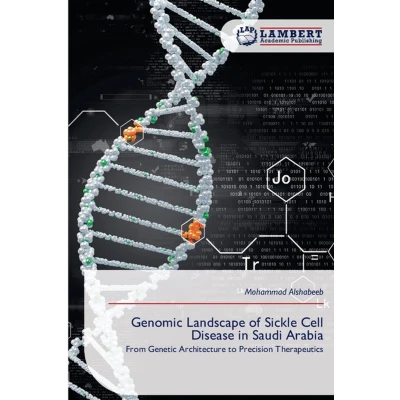
Sickle cell disease (SCD) is a hereditary blood disorder with a disproportionately high burden in Saudi Arabia. Despite decades of global research, its genomic understanding has remained largely confined to African-descent populations, leaving a critical knowledge gap for Middle Eastern patients.This book presents three interconnected genome-wide association studies on the largest genotyped Saudi SCD cohort to date. It reveals that classical thrombophilic genes do not drive thromboembolic risk in Saudi patients; instead, novel loci - particularly within olfactory receptor gene clusters - play a central role. A case-control GWAS maps the genomic architecture of SCD, uncovering population-specific variants in genes governing hemoglobin regulation, immune response, and vascular function. These discoveries are translated into therapeutic leads, identifying drugs for repurposing - including statins, allopurinol, and immunomodulatory agents - and novel druggable targets.This work establishes that ethnicity-specific genomics is indispensable for precision medicine and lays the foundation for population-tailored diagnostics and therapies for SCD patients across the Middle East and beyond.
 Prijshistorie
* Prijshistorie bevat geen data van Amazon, Amazon Marketplace.
Prijzen voor het laatst bijgewerkt op:
 Gerelateerde resultaten
 Productspecificaties


