
Geopolitical Economy Karl Polanyi and Twenty First Century Capitalism
Uitgelicht

|
31,38 |
Naar shop
|

|
32,12 |
Naar shop
|
| VERGELIJK ALLE AANBIEDERS (2) | ||
 Beschrijving
Bol
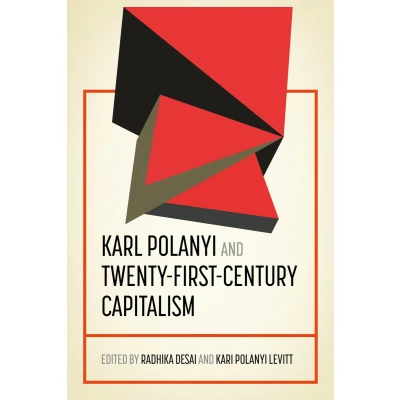
This book extends the boundaries of our understanding of Karl Polanyi's life and work. The contributors consider the links between Polanyi's ideas and income inequality, world systems theory, and comparative political economy. As the neoliberal order decays and morbid symptoms such as far right movements appear, Karl Polanyi is becoming more relevant than ever. Best known for The Great Transformation, Polanyi anticipated twenty-first century civilizational challenges of ecological collapse, social disintegration, and international conflict, warning that the unbridled domination of market capitalism would engender nationalist protective counter-movements. Radhika Desai and Kari Polanyi Levitt bring together prominent and new thinkers in the field to extend the boundaries of our understanding of Polanyi's life and work, examining why Polanyi’s thinking resonates so widely today. As far right movements, social disintegration and international conflict emerge from the decay of the neoliberal order, Karl Polanyi’s warnings against the unbridled domination of markets, is ever more relevant. The essays in Karl Polanyi for the 21st Century extend the boundaries of our understanding of Polanyi's life and work. They will interest Polanyi scholars and all interested in socialism and our future after neoliberalism. One asks whether, following Keynes and Hayek, Polanyi’s ideas will shape the twenty-first century. Some clarify, for the meaning of money as a fictitious commodity. Others resolve difficulties in understanding the building blocks of Polanyi's thought: fictitious commodities, the double movement, the United States' exceptional development, the reality of society, and socialism as freedom in a complex society. And yet others explore how Polanyi sheds light on income inequality, world systems theory, comparative political economy.


 Beschrijving
(1)
Beschrijving
(1)
This book extends the boundaries of our understanding of Karl Polanyi's life and work. The contributors consider the links between Polanyi's ideas and income inequality, world systems theory, and comparative political economy. As the neoliberal order decays and morbid symptoms such as far right movements appear, Karl Polanyi is becoming more relevant than ever. Best known for The Great Transformation, Polanyi anticipated twenty-first century civilizational challenges of ecological collapse, social disintegration, and international conflict, warning that the unbridled domination of market capitalism would engender nationalist protective counter-movements. Radhika Desai and Kari Polanyi Levitt bring together prominent and new thinkers in the field to extend the boundaries of our understanding of Polanyi's life and work, examining why Polanyi’s thinking resonates so widely today. As far right movements, social disintegration and international conflict emerge from the decay of the neoliberal order, Karl Polanyi’s warnings against the unbridled domination of markets, is ever more relevant. The essays in Karl Polanyi for the 21st Century extend the boundaries of our understanding of Polanyi's life and work. They will interest Polanyi scholars and all interested in socialism and our future after neoliberalism. One asks whether, following Keynes and Hayek, Polanyi’s ideas will shape the twenty-first century. Some clarify, for the meaning of money as a fictitious commodity. Others resolve difficulties in understanding the building blocks of Polanyi's thought: fictitious commodities, the double movement, the United States' exceptional development, the reality of society, and socialism as freedom in a complex society. And yet others explore how Polanyi sheds light on income inequality, world systems theory, comparative political economy.
 Productspecificaties
 Prijshistorie
* Prijshistorie bevat geen data van Amazon.
Prijzen voor het laatst bijgewerkt op:
 Gerelateerde resultaten


