
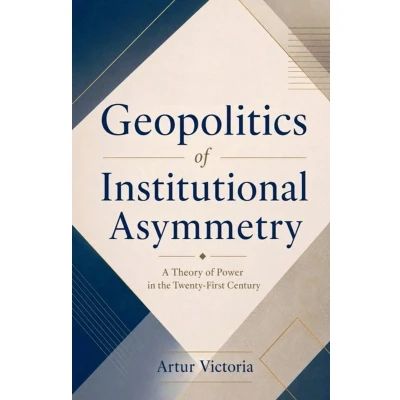
Geopolitics of Institutional Asymmetry: 8
Uitgelicht

|
23,21 |
Naar shop
|

|
52,68 |
Naar shop
|

|
52,68 |
Naar shop
|
| VERGELIJK ALLE AANBIEDERS (3) | ||
 Beschrijving
Bol
The Geopolitics of Institutional Asymmetry develops a theoretical framework for understanding power in the twenty-first century. While classical geopolitics emphasises geography, military strength, economic resources and technology, the book argues that these assets alone cannot explain why states with comparable capabilities often achieve markedly different strategic outcomes. The decisive variable increasingly lies in their institutional ecosystems: the interconnected structures through which societies preserve knowledge, coordinate resources, learn, adapt and project influence.The book introduces Institutional Asymmetry as the unequal capacity of political communities to design, shape, access, adapt to and derive strategic advantage from institutional architectures. Through comparative examination of the European Union, United States and China, it explores institutional capacity, agency, resilience, memory, capital and projection. Ultimately, it proposes that future geopolitical competition will increasingly occur between institutional architectures, making institutional adaptability a fundamental source of enduring strategic power.


 Beschrijving
(1)
Beschrijving
(1)
The Geopolitics of Institutional Asymmetry develops a theoretical framework for understanding power in the twenty-first century. While classical geopolitics emphasises geography, military strength, economic resources and technology, the book argues that these assets alone cannot explain why states with comparable capabilities often achieve markedly different strategic outcomes. The decisive variable increasingly lies in their institutional ecosystems: the interconnected structures through which societies preserve knowledge, coordinate resources, learn, adapt and project influence.The book introduces Institutional Asymmetry as the unequal capacity of political communities to design, shape, access, adapt to and derive strategic advantage from institutional architectures. Through comparative examination of the European Union, United States and China, it explores institutional capacity, agency, resilience, memory, capital and projection. Ultimately, it proposes that future geopolitical competition will increasingly occur between institutional architectures, making institutional adaptability a fundamental source of enduring strategic power.
 Productspecificaties
 Prijshistorie
* Prijshistorie bevat geen data van Amazon, Amazon Marketplace.
Prijzen voor het laatst bijgewerkt op:
 Gerelateerde resultaten


