
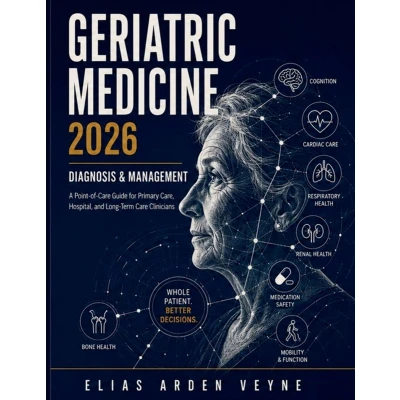
Geriatric Medicine 2026: Diagnosis & Management: A Point of Care Guide for Primary Care, Hospital, and Long Term Clinicians
Uitgelicht

|
175,00
169,00 |
Naar shop
|

|
187,65 |
Naar shop
|

|
187,65 |
Naar shop
|
| VERGELIJK ALLE AANBIEDERS (3) | ||
 Beschrijving
Bol
The clinical decisions are harder when the patient is older. This is the guide built for those decisions.Older adults rarely present with one clean diagnosis, one straightforward treatment, or one guideline that tells the whole story. Frailty changes risk. Symptoms may be atypical. Multiple conditions collide. A medication that helps one problem may worsen another.Geriatric Medicine 2026 gives busy clinicians a practical, evidence-informed framework for making safer, more individualized decisions at the point of care. Rather than treating aging as a collection of isolated diseases, it shows how function, cognition, medications, prognosis, care setting, and the patient's own goals should shape diagnosis and management.Inside, you will find practical guidance on: - Comprehensive geriatric assessment, frailty, function, and prognosis - Falls, delirium, dementia, incontinence, sarcopenia, sleep disorders, and other geriatric syndromes - Hypertension, heart failure, atrial fibrillation, diabetes, kidney disease, osteoporosis, stroke, depression, infection, and other common conditions - Polypharmacy, Beers Criteria, deprescribing, anticoagulation, medication safety, and dose adjustment - Outpatient, hospital, perioperative, skilled nursing, home-based, hospice, palliative, and telehealth care - Caregiver support, nutrition, advance care planning, and shared decision-making Every chapter follows a consistent structure designed for rapid clinical use, with focused explanations, practical decision points, reference tables, and concise Practice Point summaries.For primary care clinicians, hospitalists, nurse practitioners, physician assistants, pharmacists, residents, and long-term-care professionals who need a dependable working reference-not another book that stays on the shelf.See the whole patient. Make the better decision.


 Beschrijving
(1)
Beschrijving
(1)
The clinical decisions are harder when the patient is older. This is the guide built for those decisions.Older adults rarely present with one clean diagnosis, one straightforward treatment, or one guideline that tells the whole story. Frailty changes risk. Symptoms may be atypical. Multiple conditions collide. A medication that helps one problem may worsen another.Geriatric Medicine 2026 gives busy clinicians a practical, evidence-informed framework for making safer, more individualized decisions at the point of care. Rather than treating aging as a collection of isolated diseases, it shows how function, cognition, medications, prognosis, care setting, and the patient's own goals should shape diagnosis and management.Inside, you will find practical guidance on: - Comprehensive geriatric assessment, frailty, function, and prognosis - Falls, delirium, dementia, incontinence, sarcopenia, sleep disorders, and other geriatric syndromes - Hypertension, heart failure, atrial fibrillation, diabetes, kidney disease, osteoporosis, stroke, depression, infection, and other common conditions - Polypharmacy, Beers Criteria, deprescribing, anticoagulation, medication safety, and dose adjustment - Outpatient, hospital, perioperative, skilled nursing, home-based, hospice, palliative, and telehealth care - Caregiver support, nutrition, advance care planning, and shared decision-making Every chapter follows a consistent structure designed for rapid clinical use, with focused explanations, practical decision points, reference tables, and concise Practice Point summaries.For primary care clinicians, hospitalists, nurse practitioners, physician assistants, pharmacists, residents, and long-term-care professionals who need a dependable working reference-not another book that stays on the shelf.See the whole patient. Make the better decision.
 Productspecificaties
 Prijshistorie
* Prijshistorie bevat geen data van Amazon, Amazon Marketplace.
Prijzen voor het laatst bijgewerkt op:
 Gerelateerde resultaten


