


€ 215,00 Gratis verzending

Uitgelicht
|
|
215,00 |
Naar shop
|

|
233,11 |
Naar shop
|

|
233,11 |
Naar shop
|
| VERGELIJK ALLE AANBIEDERS (3) | ||
 Beschrijving
Vergelijk aanbieders (3)
€ 215,00 Gratis verzending
€ 233,11 Gratis verzending
€ 233,11 Gratis verzending
Winkels met andere maten
Beschrijving
(1)
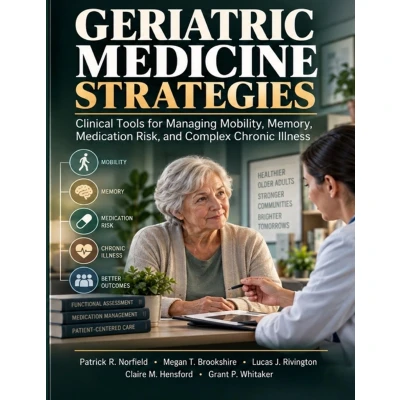
More treatment is not always better treatment.An older adult may need tighter disease control but have limited physiologic reserve. A medication may be clinically indicated yet contribute to dizziness, confusion, or falls. Greater caution may reduce one risk while quietly increasing immobility and loss of independence. Memory change may represent progressive disease-or delirium, depression, medication effects, sensory impairment, or another reversible problem.Geriatric Medicine Strategies is concerned with those competing realities.The book approaches later-life medicine through the decisions that become difficult when several priorities are valid at once. Mobility must be protected without overlooking fall risk. Cognitive symptoms require careful interpretation before they are labeled. Medication lists need periodic challenge as indications, function, renal reserve, prognosis, and treatment goals change. Chronic illnesses must still be treated, but not as though each disease exists in isolation.This creates a different kind of clinical task from ordinary protocol-driven medicine. The question is often not whether an intervention is recommended in general, but whether it remains appropriate for this patient, with this level of function, this burden of disease, and this set of competing risks.Throughout the text, attention is directed toward practical geriatric problems that alter management across specialties: frailty, declining function, falls, cognitive change, treatment burden, multimorbidity, medication-related harm, and the need to reassess plans as circumstances evolve. The aim is to help clinicians connect those domains instead of managing them as separate checklists.For physicians, residents, trainees, and other healthcare professionals caring for older adults, the book provides clinical tools for situations in which several individually reasonable interventions may not produce a reasonable overall plan.The strategy is therefore selective rather than additive: identify what is driving risk, preserve what matters to function and independence, reduce avoidable treatment burden, and make the different parts of the care plan work together.
 Prijshistorie
 * Prijshistorie bevat geen data van Amazon, Amazon Marketplace.
Prijzen voor het laatst bijgewerkt op:
 Gerelateerde resultaten
 Productspecificaties


