








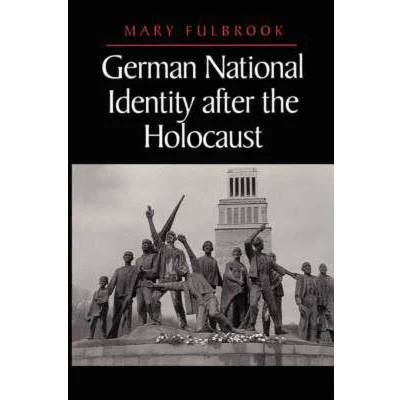
Germn Natnl Identity Aftr The Holocaust
Uitgelicht

|
23,44 |
Naar shop
|

|
23,44 |
Naar shop
|

|
27,99 |
Naar shop
|
 Beschrijving
Bol
aeo A major new study of German national identity and of the difficulty of coming to terms with the legacy of the Holocaust. aeo Develops a new theory of the nation as a constructed community with a common legacy and destiny. For over half a century, Germans have lived in the shadow of Auschwitz. Who was responsible for the mass murder of millions of people in the Holocaust: just a small gang of evil men, Hitler and his henchmen; or certain groups within a particular system; or even the whole nation? Could the roots of malignancy be traced far back in German history? Or did the Holocaust have more to do with European modernity? Should Germans live with a legacy of guilt forever? And how, if at all, could an acceptable German national identity be defined? These questions dogged public debates in both East and West Germany in the long period of division. Both states officially claimed to have "overcome the past" more effectively than the other; both sought to construct new, opposing identities as the "better Germany". But, in different ways, official claims ran at odds with the kaleidoscope of popular collective memories; dissonances, sensitivities and taboos were the order of the day on both sides of the Wall. And in the 1990s, with continued heated debates over past and present, it was clear that inner unity appeared to be no automatic consequence of formal unification. Drawing on a wide range of material - from landscapes of memory and rituals of commemoration, through private diaries, oral history interviews and public opinion poll surveys, to the speeches of politicians and the writings of professional historians - Fulbrook provides a clear analysis of key controversies, events and patterns of historical and national consciousness in East and West Germany in equal depth. Arguing against "essentialist" conceptions of the nation, Fulbrook presents a theory of the nation as a constructed community of shared legacy and common destiny, and shows how the conditions for the easy construction of any such identity have been notably lacking in Germany after the Holocaust. This book will be of interest to advanced undergraduate and postgraduate students in history, politics, and German and European Studies, as well as established scholars and interested members of the public. For over half a century, Germans have lived in the shadow of Auschwitz. Who was responsible for the mass murder of millions of people in the Holocaust: just a small gang of evil men, Hitler and his henchmen; or certain groups within a particular system; or even the whole nation? Could the roots of malignancy be traced far back in German history? Or did the Holocaust have more to do with European modernity? Should Germans live with a legacy of guilt forever? And how, if at all, could an acceptable German national identity be defined? These questions dogged public debates in both East and West Germany in the long period of division. Both states officially claimed to have "overcome the past" more effectively than the other; both sought to construct new, opposing identities as the "better Germany". But, in different ways, official claims ran at odds with the kaleidoscope of popular collective memories; dissonances, sensitivities and taboos were the order of the day on both sides of the Wall. And in the 1990s, with continued heated debates over past and present, it was clear that inner unity appeared to be no automatic consequence of formal unification. Drawing on a wide range of material - from landscapes of memory and rituals of commemoration, through private diaries, oral history interviews and public opinion poll surveys, to the speeches of politicians and the writings of professional historians - Fulbrook provides a clear analysis of key controversies, events and patterns of historical and national consciousness in East and West Germany in equal depth. Arguing against "essentialist" conceptions of the nation, Fulbrook presents a theory of the nation as a constructed community of shared legacy and common destiny, and shows how the conditions for the easy construction of any such identity have been notably lacking in Germany after the Holocaust. This book will be of interest to advanced undergraduate and postgraduate students in history, politics, and German and European Studies, as well as established scholars and interested members of the public.


 Beschrijving
(2)
Beschrijving
(2)
aeo A major new study of German national identity and of the difficulty of coming to terms with the legacy of the Holocaust. aeo Develops a new theory of the nation as a constructed community with a common legacy and destiny. For over half a century, Germans have lived in the shadow of Auschwitz. Who was responsible for the mass murder of millions of people in the Holocaust: just a small gang of evil men, Hitler and his henchmen; or certain groups within a particular system; or even the whole nation? Could the roots of malignancy be traced far back in German history? Or did the Holocaust have more to do with European modernity? Should Germans live with a legacy of guilt forever? And how, if at all, could an acceptable German national identity be defined? These questions dogged public debates in both East and West Germany in the long period of division. Both states officially claimed to have "overcome the past" more effectively than the other; both sought to construct new, opposing identities as the "better Germany". But, in different ways, official claims ran at odds with the kaleidoscope of popular collective memories; dissonances, sensitivities and taboos were the order of the day on both sides of the Wall. And in the 1990s, with continued heated debates over past and present, it was clear that inner unity appeared to be no automatic consequence of formal unification. Drawing on a wide range of material - from landscapes of memory and rituals of commemoration, through private diaries, oral history interviews and public opinion poll surveys, to the speeches of politicians and the writings of professional historians - Fulbrook provides a clear analysis of key controversies, events and patterns of historical and national consciousness in East and West Germany in equal depth. Arguing against "essentialist" conceptions of the nation, Fulbrook presents a theory of the nation as a constructed community of shared legacy and common destiny, and shows how the conditions for the easy construction of any such identity have been notably lacking in Germany after the Holocaust. This book will be of interest to advanced undergraduate and postgraduate students in history, politics, and German and European Studies, as well as established scholars and interested members of the public. For over half a century, Germans have lived in the shadow of Auschwitz. Who was responsible for the mass murder of millions of people in the Holocaust: just a small gang of evil men, Hitler and his henchmen; or certain groups within a particular system; or even the whole nation? Could the roots of malignancy be traced far back in German history? Or did the Holocaust have more to do with European modernity? Should Germans live with a legacy of guilt forever? And how, if at all, could an acceptable German national identity be defined? These questions dogged public debates in both East and West Germany in the long period of division. Both states officially claimed to have "overcome the past" more effectively than the other; both sought to construct new, opposing identities as the "better Germany". But, in different ways, official claims ran at odds with the kaleidoscope of popular collective memories; dissonances, sensitivities and taboos were the order of the day on both sides of the Wall. And in the 1990s, with continued heated debates over past and present, it was clear that inner unity appeared to be no automatic consequence of formal unification. Drawing on a wide range of material - from landscapes of memory and rituals of commemoration, through private diaries, oral history interviews and public opinion poll surveys, to the speeches of politicians and the writings of professional historians - Fulbrook provides a clear analysis of key controversies, events and patterns of historical and national consciousness in East and West Germany in equal depth. Arguing against "essentialist" conceptions of the nation, Fulbrook presents a theory of the nation as a constructed community of shared legacy and common destiny, and shows how the conditions for the easy construction of any such identity have been notably lacking in Germany after the Holocaust. This book will be of interest to advanced undergraduate and postgraduate students in history, politics, and German and European Studies, as well as established scholars and interested members of the public.
AmazonPagina's: 260, Editie: Eerste editie, Paperback, Polity Press
 Productspecificaties
 Prijshistorie
* Prijshistorie bevat geen data van Amazon, Amazon Marketplace.
Prijzen voor het laatst bijgewerkt op:
 Gerelateerde resultaten


