

€ 24,90 Gratis verzending

Gesponsorde links
|
|
24,90 |
Naar shop
|

|
24,90 |
Naar shop
|

|
26,99 |
Naar shop
|
| VERGELIJK ALLE AANBIEDERS (3) | ||
 Beschrijving
Vergelijk aanbieders (3)
Gesponsorde links · Sommige shops betalen ons een vergoeding
€ 24,90 Gratis verzending
€ 24,90 Gratis verzending
€ 26,99 Gratis verzending
Winkels met andere maten
Beschrijving
(1)
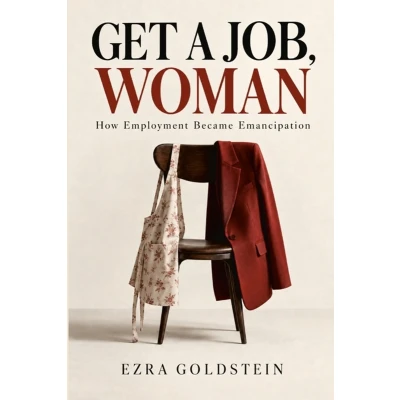
Get a Job, Woman: How Employment Became Emancipation asks a deceptively simple question: when did having a job become synonymous with being a woman who works?Women have always worked. They have raised children, managed households, cultivated land, traded, preserved food, cared for relatives, maintained property, supported family enterprises and organised the daily economies upon which societies depend. Yet as work moved out of the household and into factories, offices and institutions, paid employment increasingly became the form of labour that modern society recognised, measured and respected.From that transformation emerged a powerful new idea: the employed woman was not merely earning a wage-she was independent, ambitious, modern and emancipated.Ezra Goldstein examines how that idea took hold and what it obscured. Following the movement of labour from household to market, the rise of the wage, the decline of the productive household and the growing prestige of professional identity, Get a Job, Woman explores the strange economic logic by which cooking, childcare, administration, cleaning and care may be dismissed when performed for one's own family yet immediately recognised as work when performed for strangers.The book does not argue that women should not work, nor does it romanticise an idealised domestic past. Instead, it asks a more difficult question: why did one particular form of work-paid employment-become so closely identified with female freedom?Examining money, time, motherhood, dependence, two-income households, consumer culture and the professionalisation of ordinary life, Goldstein challenges the assumption that dependence disappears simply because it moves from husband and household to employer, bank and payroll.Provocative without being nostalgic, Get a Job, Woman is an inquiry into work, value and freedom-and into the woman who, according to modern economic language, supposedly "doesn't work."
 Prijshistorie
* Prijshistorie bevat geen data van Amazon, Amazon Marketplace.
Prijzen voor het laatst bijgewerkt op:
 Gerelateerde resultaten
 Productspecificaties


